Lamu archipelago · Stone towns
Arriving in Lamu by water
Every arrival in Lamu ends with a boat. The town has no cars to speak of, its lanes are for walking and donkeys, and its seafront is the front door of a Swahili town still lived in.
- The tide
- Any state of tide
- From Mombasa
- About 340 km north by road and boat
- Kindest months
- December to March, or July-October
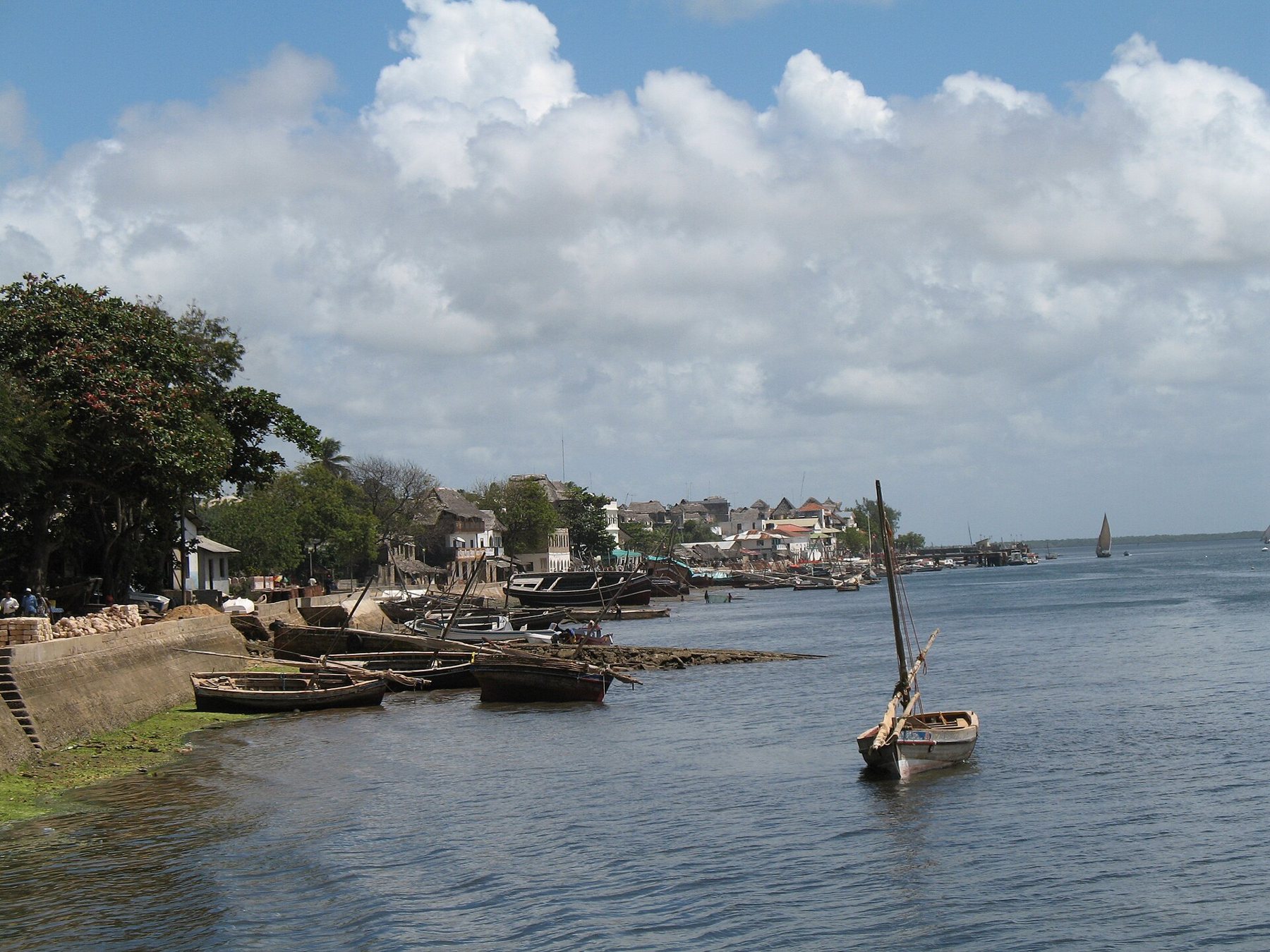
The last part of the journey to Lamu is always on the water. You may have come by road up the long coast route, or on a small plane to the airstrip on Manda Island, but either way you finish in an open boat, crossing the channel with the town growing ahead of you: a long line of white and ochre buildings, a mosque or two, a stone fort set back from the shore, and dhows at anchor in front.
It is a good way to arrive. The town you are heading for has been reached this way for centuries, and the change of pace starts on the crossing.
Lamu sits on the island of the same name, one of a cluster of low islands and mangrove channels close to the mainland in Kenya's far north-east corner. The water around them is sheltered, shallow in places and laced with sandbanks, and boats, not roads, have always tied the islands together. Learn to read the tide and the boat landings, and the archipelago opens up.
The two ways in
By road and the Mokowe jetty
The road from Malindi runs north through Garsen and on towards the mainland jetty at Mokowe, opposite Lamu Island. From the jetty, public boats and private boats cross to the Lamu seafront in a short ride. The road has improved in recent years but has also seen security restrictions at times, with convoys or escorts required on some stretches. Conditions change, so check current advice before you go and travel in daylight.
By air to Manda
Most visitors fly. Small planes land on Manda Island, across a narrow channel from Lamu town, and boats wait at the jetty to take you over. The crossing takes a few minutes. Have small notes ready, agree the fare before you step in, and keep your bag on your knees or under the seat if the boat is open and there is spray.
Boats run at all states of the tide, though at the lowest springs the landing can mean a few steps through shallow water or a scramble up wet stone. Wear shoes you do not mind getting wet.
A town with no cars
Step onto the seafront and the first thing you notice is the silence of engines. Lamu's old town has almost no motor vehicles. The lanes are too narrow, and the town has always moved on foot, by boat and by donkey. Donkeys carry building stone, water, sacks of cement and shopping; they have right of way in practice, so step into a doorway and let them pass.
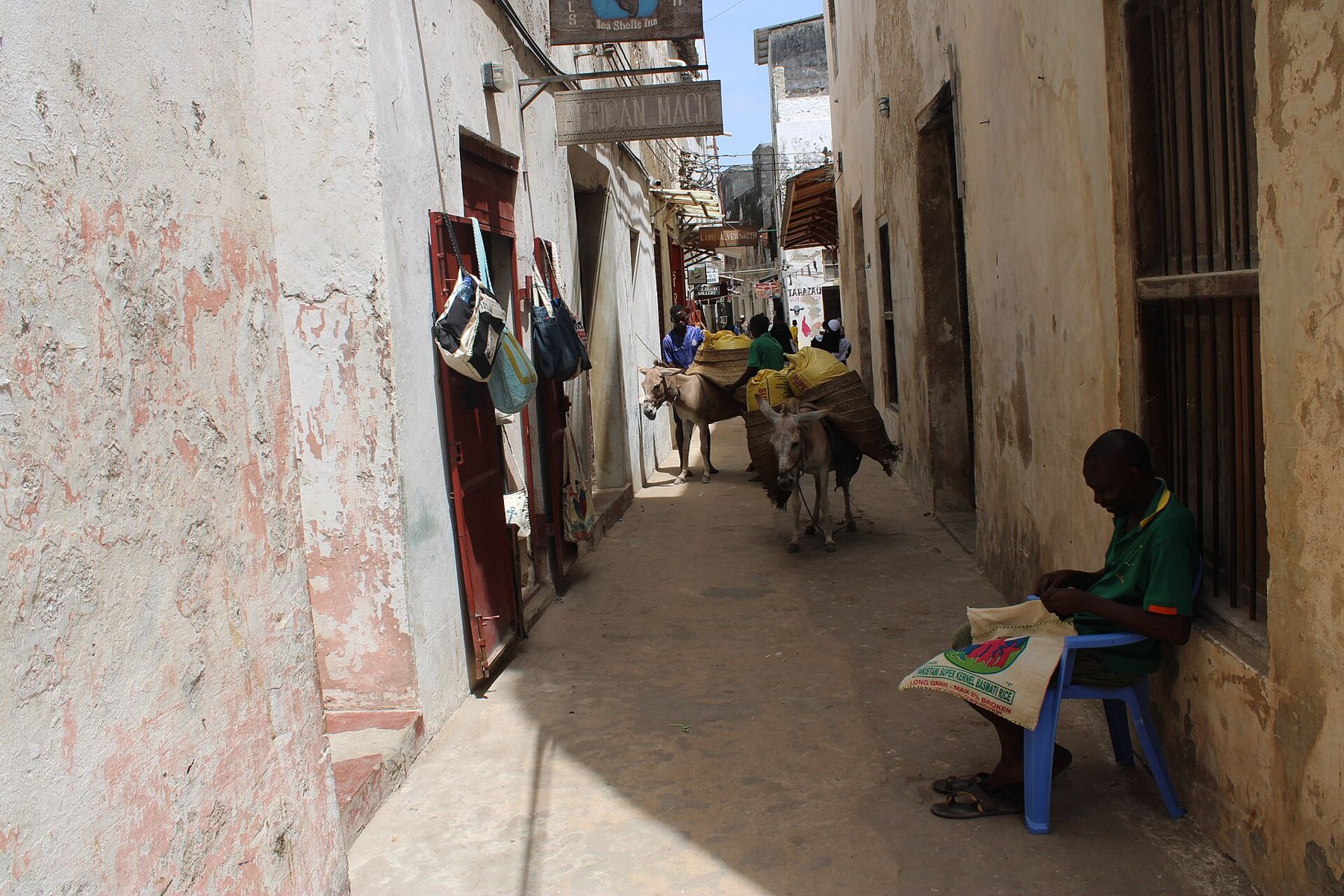
The seafront road runs along the water, busy with boats loading and unloading. Behind it, parallel to the shore, runs the long main lane known as Usita wa Mui, lined with small shops, tailors and doorways. From it, narrower lanes climb inland between tall coral-stone houses. Most visitors get lost at least once. It hardly matters: walk downhill and you reach the sea.
Most visitors get lost at least once. It hardly matters: walk downhill and you reach the sea.The whole coast · Stone townsSwahili doorways and what is carved on them
The old town, the fort and the museum
Lamu Old Town is a UNESCO World Heritage Site, recognised as one of the oldest and best-kept Swahili towns in East Africa. What makes it unusual is not any single building but the fact that the town is still lived in much as it was: families in coral-stone houses, mosques calling the hours, carved doors opening onto inner courtyards. The heritage listing is a recognition of a living town, not a museum piece, and that should shape how you move through it.
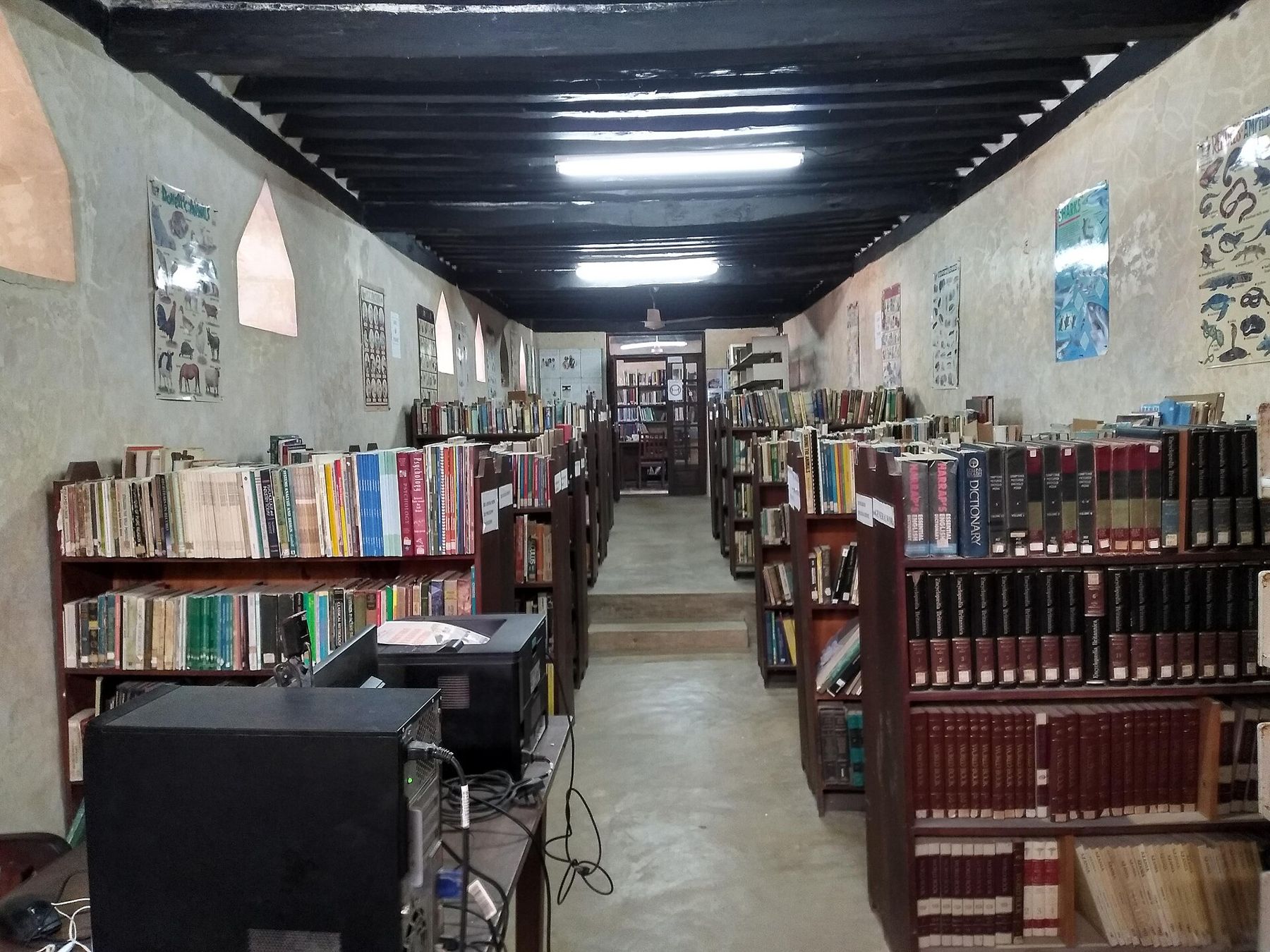
Lamu Fort stands back from the seafront on the main square, a square, battlemented building of coral stone put up in the early nineteenth century. In its time it served as a garrison and later as a prison. Today it is in the care of the National Museums of Kenya and holds exhibitions and a public library.
On the seafront, the Lamu Museum, in an old colonial-era building, tells the story of the archipelago: its boats, its crafts, its weddings and its music, including the great carved ceremonial horns called siwa. A restored Swahili house elsewhere in the town shows how the old merchant homes were arranged. The museums sometimes sell a combined ticket. Hours and fees change, so check before you go.
Shela and the dunes
A few kilometres along the shore from Lamu town lies Shela, a smaller village with its own mosque, quiet lanes and, beyond it, a long beach backed by high sand dunes. You can walk there along the waterfront path in under an hour, or take a boat. Walking is pleasantest early or late in the day; at midday the sun on the sand is fierce.
Beyond Shela the beach runs on for kilometres, open to the ocean and backed by dunes. Climb one of the dunes for the view across the channel to Manda. Swim with care: the beach faces open water, there are no lifeguards, and currents can be strong, especially when the wind is up. Do not leave valuables on the sand, and do not walk the long empty stretch alone after dark.
Dress, prayer and Ramadan
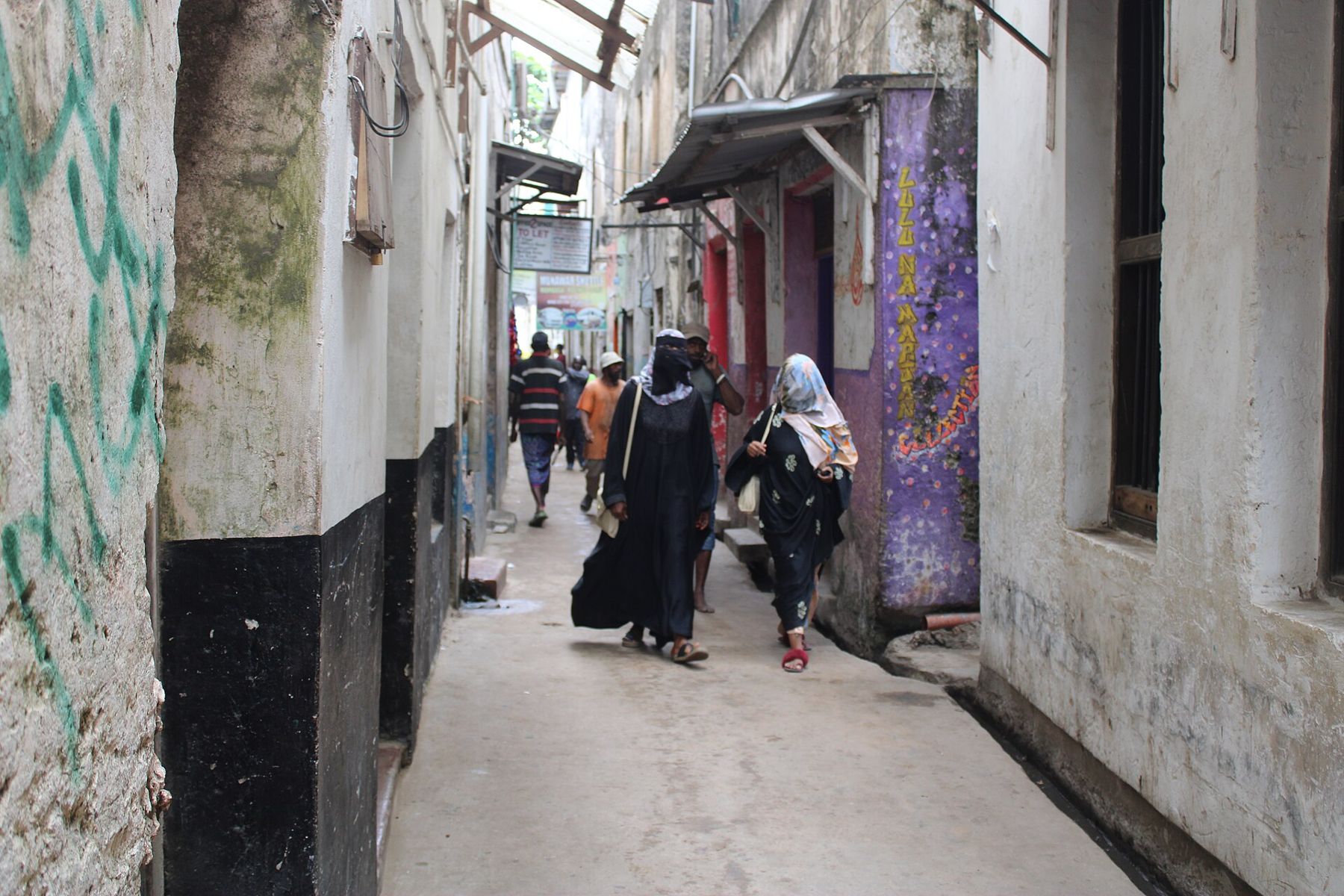
Lamu is a conservative Muslim town, and visitors are expected to respect that. In town, cover your shoulders and knees; men and women both. Swimwear belongs on the beach at Shela, not in the lanes. Ask before you photograph people, and accept a no. Public displays of affection are best left at home.
During the month of Ramadan, people fast from dawn to sunset. Eat, drink and smoke discreetly in daylight, out of public view, and expect the rhythm of the town to change: quiet afternoons, busy evenings after the fast is broken. The month moves through the calendar each year, so check the dates before you plan a visit. Fridays around midday the mosques fill, and some businesses close for prayers.
- Carry a light scarf or long shirt for town walks.
- Small notes are useful for boats and small purchases.
- Drink bottled or treated water.
- Malaria is present on the coast; ask a travel clinic about prevention before you leave.
Around the archipelago
Lamu town is the start of an island world. Boats run to Manda, to Pate and to the villages where dhows are still built by hand; for their story, read dhows, then and now. When to go depends on the wind and the rain. The northeast monsoon from around December to March usually brings calm, hot days, and the months after the long rains are drier and breezier; the guide to the coast's two winds sets them out month by month. And if you are coming from the south, a stop at Malindi on the way breaks the journey well.
Every photograph here was shared under an open licence; the photographers are named on the pictures-by page.