North coast · Reefs and creeks
Watamu's marine park from the beach
Off Watamu's white bays lies one of Kenya's oldest marine parks: coral gardens, reef fish and sea turtles, protected since the 1960s and close enough to see from the sand.
- The tide
- Go near high water
- From Mombasa
- About 105 km north by road
- Kindest months
- October to March, calm water
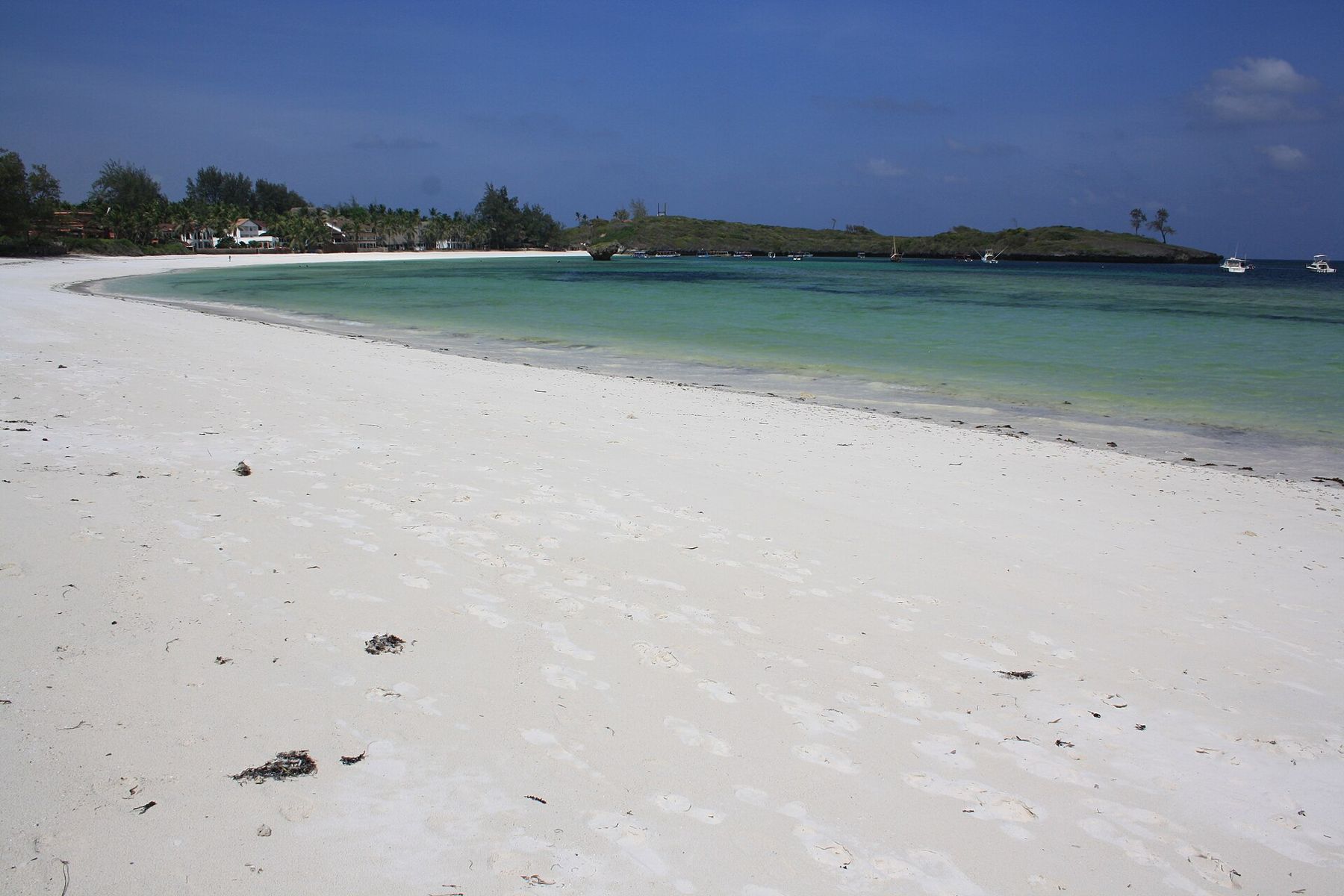
Watamu is a small town on a stretch of white beaches and coral-rock headlands north of Kilifi. The bays are pale sand and turquoise water, with small islands of eroded coral standing just offshore. Out beyond them, protecting the reef, lies the Watamu Marine National Park. You can see the edge of it from the beach on a clear day, and you can be swimming over its coral within minutes.
A park in the sea
Watamu and Malindi were among the first marine protected areas in Kenya, set up in the late 1960s. The park covers the lagoon and reef off Watamu, and fishing and collecting are not allowed inside it. Around it lies a wider marine reserve where traditional fishing continues under rules. Both are managed by the Kenya Wildlife Service, and park fees are paid to the service rather than to boat crews; check the current fees and how to pay before you go.
Protection shows. Within the park the fish are more numerous and often less shy than outside it, and the coral, though it has suffered from warm-water bleaching like reefs across the Indian Ocean, still has living gardens worth seeing.
The bays
Watamu's shore is not one long beach but a string of bays between headlands. Turtle Bay, near the centre, is the best known, and others run north and south of it. Each has its own shape, with small coral islets offshore that the sea has undercut so they stand on narrow bases, like mushrooms. At low tide some of these can be reached on foot over the sand.
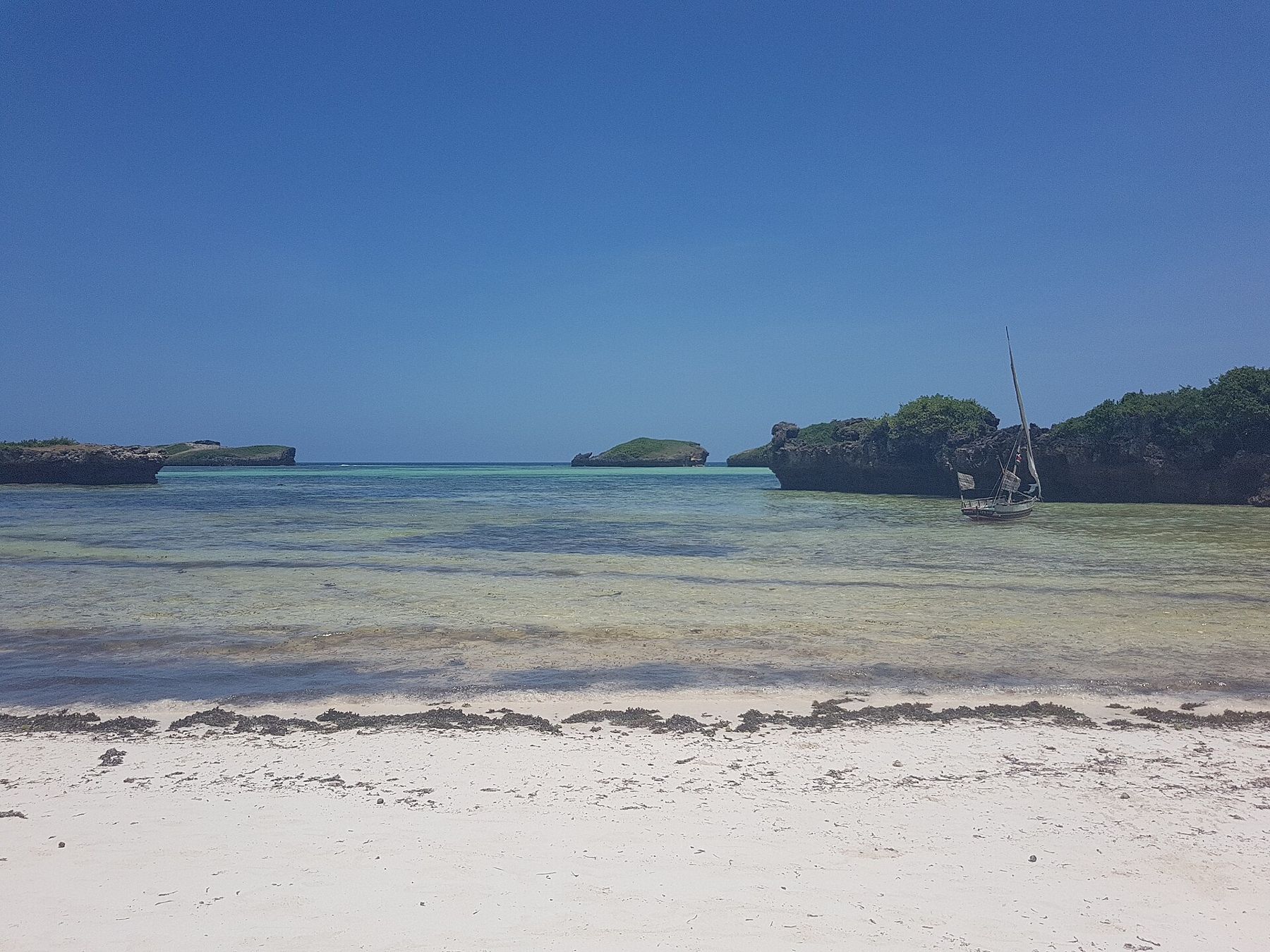
The beaches are wide at low water and much narrower at high water, when the sea comes up to the coral rock in places. Swimming is generally better on the higher half of the tide, when there is water over the sand.
At low water the sand between the islets becomes a place to walk, and pools left on the rock hold small fish, crabs and sea cucumbers. The same care applies as anywhere on the reef: watch for sea urchins, wear something on your feet, and leave every creature where you found it. The story on reef walks has more on moving across the flats without harm.
Glass-bottom boats and snorkelling
Most visits to the coral gardens are made by boat. Glass-bottom boats run out from the beaches to the main reef areas, letting you look down at coral and fish without getting wet, and usually stop for an hour or so of snorkelling. Prices, timings and what is included vary between boats and seasons. Arrange trips through a source you trust and make sure the boat carries life jackets.
North coast · Reefs and creeksMida Creek on the falling tideIf you would rather swim from the shore, ask about where the protected area begins and which parts of the bay are safe to snorkel from the beach. Some coral lies close in, but channels between the reef patches can carry strong currents on a turning tide, and boats come and go across the bays. Swim with someone, and stay where boat crews can see you.
Tide matters here as on the rest of the coast. Most boats go out on the higher part of the tide, when there is enough water over the coral to move freely and snorkel safely. At very low water, parts of the reef can be too shallow to swim over without damaging it.
Rules for snorkellers
- Do not stand on coral, and keep your fins well above it.
- Do not touch, feed or chase fish or turtles.
- Take nothing, living or dead: shells, coral and starfish stay in the park.
- Wear a T-shirt; sunburn on the back comes fast while you float.
- Stay close to the boat and listen to the crew about currents.
Turtles on the beach
Sea turtles feed in the park, and green turtles come ashore on Watamu's beaches to nest. Over the years local conservation work has helped protect nests, release hatchlings and free turtles caught in fishing nets, often with fishermen taking part. If you are lucky enough to see a nest hatching, keep back, keep lights off and let the hatchlings make their own way to the sea.
On any beach here, avoid bright lights near the shore at night, leave marked nests alone and take your rubbish away with you.
Plastic in the sea is a real threat to turtles, which can mistake floating bags for jellyfish. Refusing a straw and carrying a refillable bottle is a small thing, but on a coast like this one it adds up.
When the coast is kindest
The reef is at its best when the sea is calm and clear. That is usually during the kaskazi, the northeast monsoon, roughly from December to March, and often again in October and November between the rains. In the kusi months, roughly June to September, the southeast wind brings swell, cloudier water and seaweed on some beaches, and boat trips may be cut short or cancelled. The two winds story sets out the year.
Around the park
Watamu is a good base for this end of the coast. Just south lies Mida Creek, a shallow tidal inlet full of wading birds, and a short way inland are the coral-stone ruins of Gede, a Swahili town abandoned centuries ago in the forest. Malindi, with its own marine park and its river-coloured bay, is up the road; read why the sea at Malindi changes colour.
Wherever you go in the water, the simple rule is the same: look closely, touch nothing, and leave the reef as you found it.
Every photograph here was shared under an open licence; the photographers are named on the pictures-by page.