Lamu archipelago · Winds and rains
Dhows, then and now
For centuries the trade of this coast moved under sail, on wooden boats riding the monsoon. Around Lamu, dhows are still built by hand, and they still sail.
- The tide
- Go near high water
- From Mombasa
- Mombasa harbour, or north to Lamu
- Kindest months
- December to March, calmer water
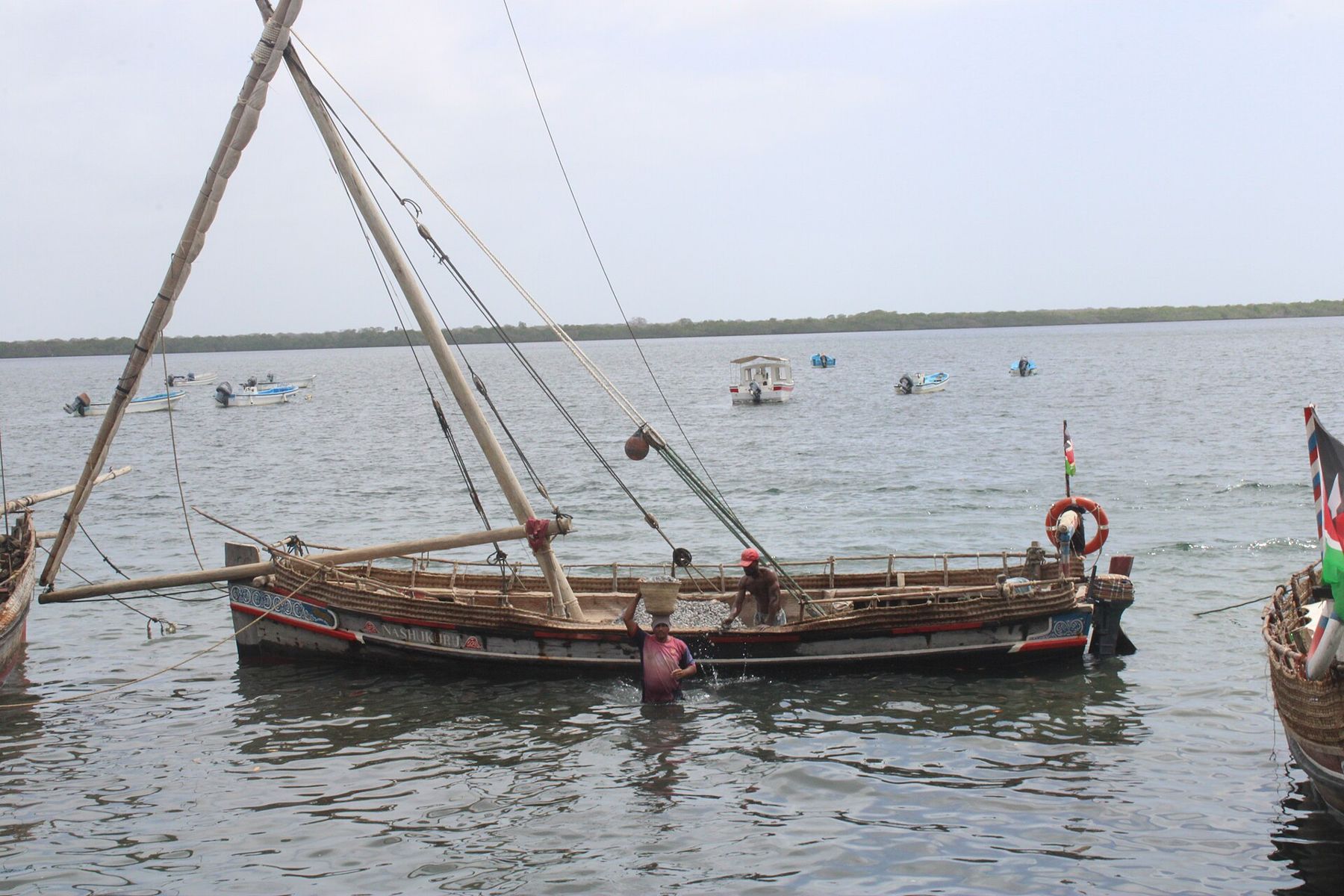
Stand on the seafront at Lamu in the late afternoon and watch the channel. Among the motorboats and ferries, a wooden boat slides past under a single slanting sail, its hull low, its mast raked forward, its crew sitting easy on the gunwale. It is a scene that has played out on this water for hundreds of years.
What a dhow is
Dhow is the word outsiders use for a family of wooden sailing boats of the western Indian Ocean. On the Kenyan coast people use more precise names. The boats share a few features: a hull built of planks, a raked mast, and a lateen sail, a large triangular sail hung from a long yard set at an angle to the mast. The lateen rig lets a boat sail well across the wind, and it gives the dhow its unmistakable shape on the horizon.
The biggest boats, the jahazi, are the cargo carriers, built for longer voyages along the coast and, in the past, across the ocean. The smaller mashua is a working boat for fishing and local transport. There are other types and names, and in the past there was the mtepe, a boat whose planks were sewn together with coconut fibre rope instead of nails. The mtepe has long gone from these waters, but it is remembered in the Lamu archipelago, where such boats were once made.
Riding the monsoon
The great age of the dhow trade depended on the winds. From around December to March, the northeast monsoon, the kaskazi, carried ships from Arabia, the Persian Gulf and western India down the African coast. They brought cloth, dates, carpets, salt and other goods. Around the middle of the year, when the southeast monsoon, the kusi, set in, the ships sailed home, loaded with mangrove poles, grain, ivory and other cargo from the coast.
The rhythm of the winds made the trade predictable, and it made the towns of the coast rich. Merchants waited in port for the wind to change, and the stone towns grew around their harbours. The story of the coast's two winds sets out the seasons in more detail.
That long-distance trade under sail has dwindled. Engines, steel ships and changing politics over the twentieth century ended most of it. But dhows never stopped working the coast itself, and in the Lamu archipelago they remain part of daily life.
Mombasa · Stone townsFort Jesus, wall by wallBuilt by eye
Dhows in the Lamu archipelago are built on the beach or in open-sided yards, often without written plans. A master builder works by eye and by experience, shaping the hull plank by plank around a keel and frames. Hardwoods and mangrove timber are used, and much of the work is still done with hand tools. Some boats take months to build.
Several villages in the archipelago have boatbuilding traditions, and you may see hulls in various stages along the shore, propped on timbers above the high-water mark. If you watch, keep a respectful distance from the work, and ask before taking photographs of the builders.
The work is passed on in families and through apprenticeship, and the tools and words of the trade have changed slowly. Today many boats carry an engine as well as a sail, and some hulls are built for passengers rather than cargo, but the shape is the old one.
The same woodworking skill shows in the carved doors of the town, which are the subject of Swahili doorways and what is carved on them.
Sailing on one
Around Lamu, and in some places further south, you can go out on a dhow for a few hours. Typical outings include an afternoon sail along the channel, a trip to a sandbank or a beach, or a sunset sail. Some include fishing or snorkelling.
- Agree the route, the time and the price before you set off, and whether food and drink are included.
- Ask about life jackets, and wear one if you are not a confident swimmer.
- Bring a hat and sunscreen; the boats are open and there is little shade.
- Sailing depends on wind and tide. A calm day can mean an engine, or a slow drift; a stiff breeze can mean spray.
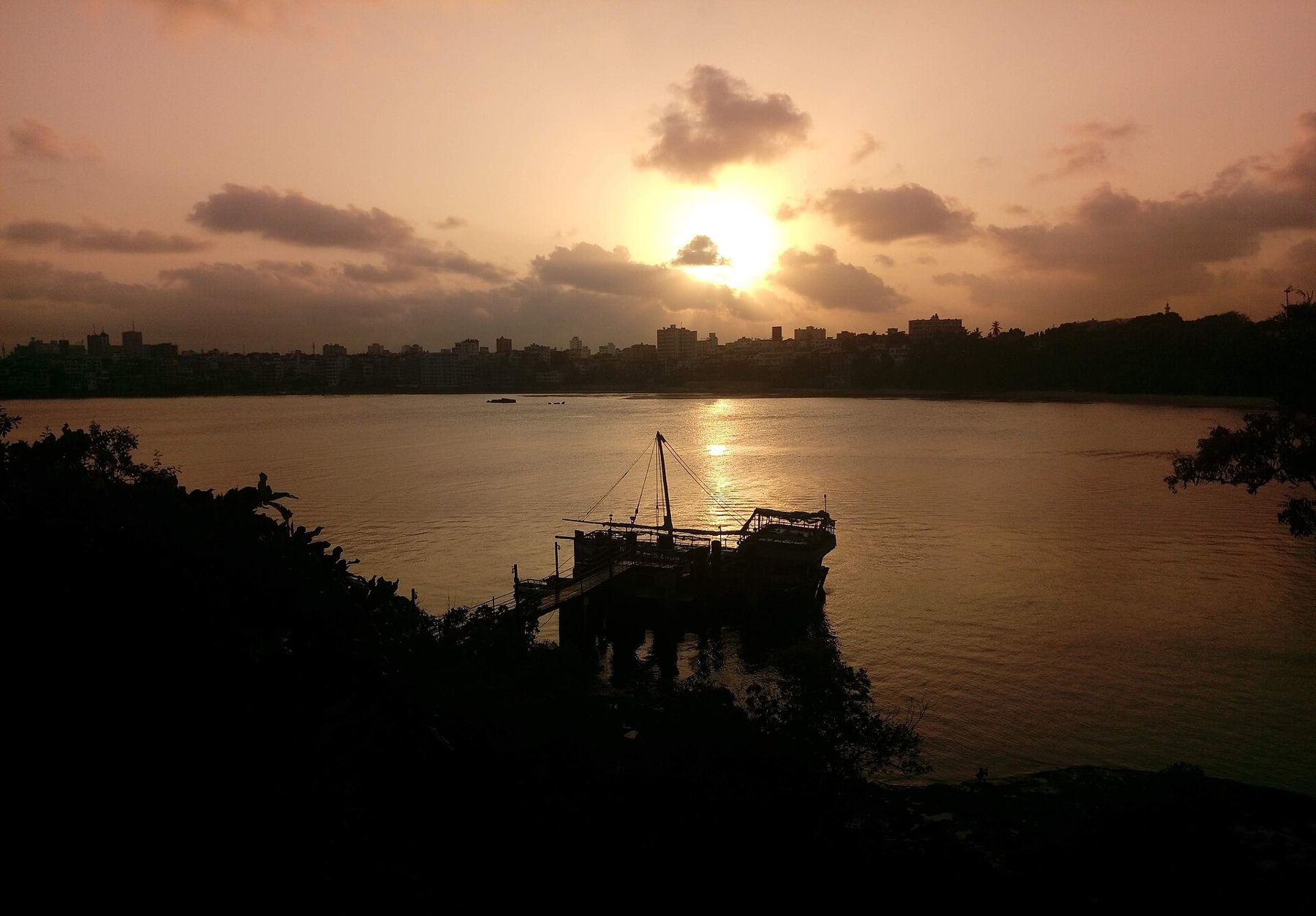
Getting on and off the boats is easiest near high water, when they can come close to the jetties and the seawall. At low tide you may have to wade across the shallows or clamber across other boats.
The festival
Lamu holds a cultural festival each year, usually in the later months of the year, with dhow races in the channel, donkey races along the seafront, music, poetry and crafts. The dhow races are the highlight for many: crews compete under full sail, and the seafront fills with people watching. Dates change from year to year, so check before you go. The town is busier during the festival, and it is worth arranging the practical side of your trip early.
Where to see them
Lamu town's seafront is the easiest place to watch dhows coming and going, and the channel between Lamu and Manda is busy with them. For how to reach the town, read arriving in Lamu by water. In Mombasa, the old harbour below the Old Town was for centuries the place where ocean-going dhows put in; today far fewer come, but you may still see wooden boats there. A walk round Mombasa Old Town on foot passes close by. Wherever you see one under sail, it is worth stopping to watch.
Every photograph here was shared under an open licence; the photographers are named on the pictures-by page.