Mombasa · Stone towns
Mombasa Old Town on foot
Between Fort Jesus and the old harbour, narrow lanes of coral-stone houses, carved balconies and doors hold the layers of Mombasa's past. Go on foot, slowly, and dress for the town.
- The tide
- Tide hardly matters
- From Mombasa
- Mombasa island itself
- Kindest months
- Year round, mornings
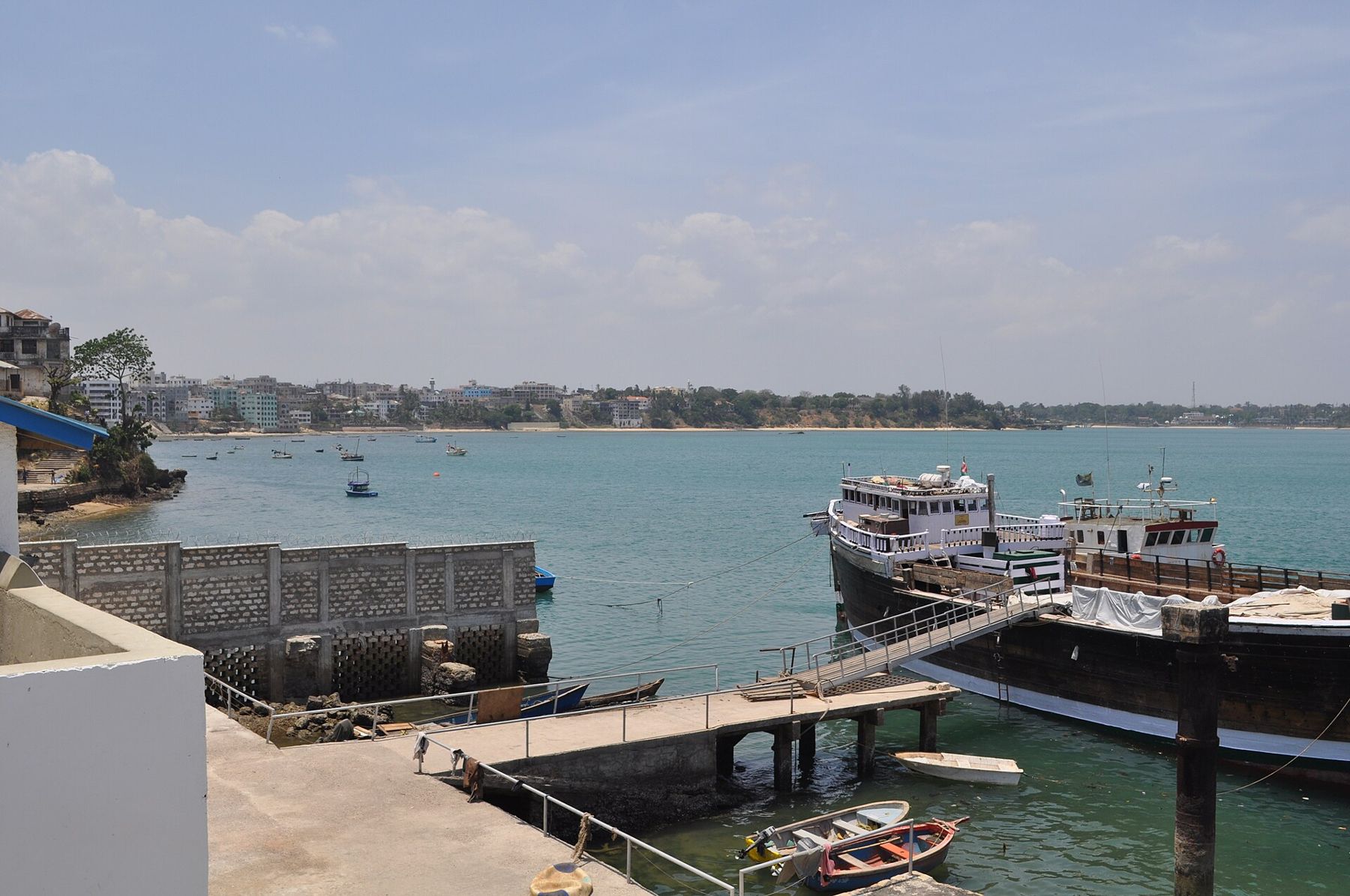
Mombasa is a big, busy port city, but at its eastern edge, between Fort Jesus and the water, the streets narrow and slow down. This is the Old Town: a few blocks of tall, plastered coral-stone houses, carved wooden balconies, heavy studded doors and small mosques, with the old harbour at the bottom of the hill. It is lived in, not preserved behind a fence, and that is what makes it worth a morning on foot.
Why the lanes look the way they do
Mombasa has been a trading town for many centuries, and the Old Town shows the people who traded here. The basic houses are Swahili: thick walls of coral stone and lime, small windows, rooms arranged for privacy and cool air, flat or makuti roofs. Arab influence came with Omani rule, in carved doors and in the patterns of daily life. From the nineteenth century, merchants and craftsmen from the Indian subcontinent built here too, and much of the ornate wooden balcony work dates from that time.
The result is a mix rather than a style. One house has a plain Swahili front, the next a balcony of fretted wood hanging over the lane, the next a doorway with a carved frame and brass studs. Look up as often as you look ahead.
Doors and balconies
Two features catch the eye again and again. The first is the doors. Many old houses have heavy wooden doors set in carved frames, some with rows of pointed brass studs, others with bands of carved pattern running up the posts and across the lintel. Some are very old; many have been repaired, copied or replaced over the years. The second is the balconies: enclosed wooden galleries on the upper floors, with fretted screens that let air in and keep the street's gaze out. Together they give the lanes their shade and their rhythm.
Many of these buildings are in poor repair, and some have been lost. Conservation rules for the Old Town aim to protect what survives, but upkeep is expensive and owners do not always have the means. Seeing a lovingly restored front next to one held up by props is part of the reality of the place.
A route from the fort to the harbour
There is no set path, and getting a little lost is part of it, but a simple route ties the main sights together.
- Start at Fort Jesus. The fort sits at the edge of the Old Town, and the lanes begin just across the road from its gate.
- Walk Mbarak Hinawy Road. This is the old main street, running north from the fort area towards the harbour, lined with balconied buildings and small shops.
- Turn into the side lanes. Narrow alleys lead off in both directions, past doorways, tiny squares and the occasional carved door.
- Come down to the Old Port. The lanes end at the waterfront, where small boats tie up and the channel opens towards the sea.
The whole loop is short in distance, but give it two or three hours. Most of what is worth seeing is small: a hinge, a window grille, the shade of a balcony at noon.
Mornings are best. The lanes are cooler, shops are opening and people are about their business. By early afternoon the heat builds and many doors close for a rest, and on Fridays around midday the town gathers at the mosques for prayers. Bring water and wear shoes you can walk in; the lanes are uneven and sometimes wet.
The Old Port
For centuries the Old Port was where Mombasa met the ocean. Dhows from Arabia, the Persian Gulf and India came in on the northeast monsoon, the kaskazi, carrying cloth, dates, carpets and other goods, and sailed home on the southeast monsoon, the kusi, with timber, ivory and other cargoes from Africa. The great commercial port moved long ago to the other side of the island, at Kilindini, and the old harbour is now quiet by comparison. The ocean-going dhow trade is a shadow of what it was.
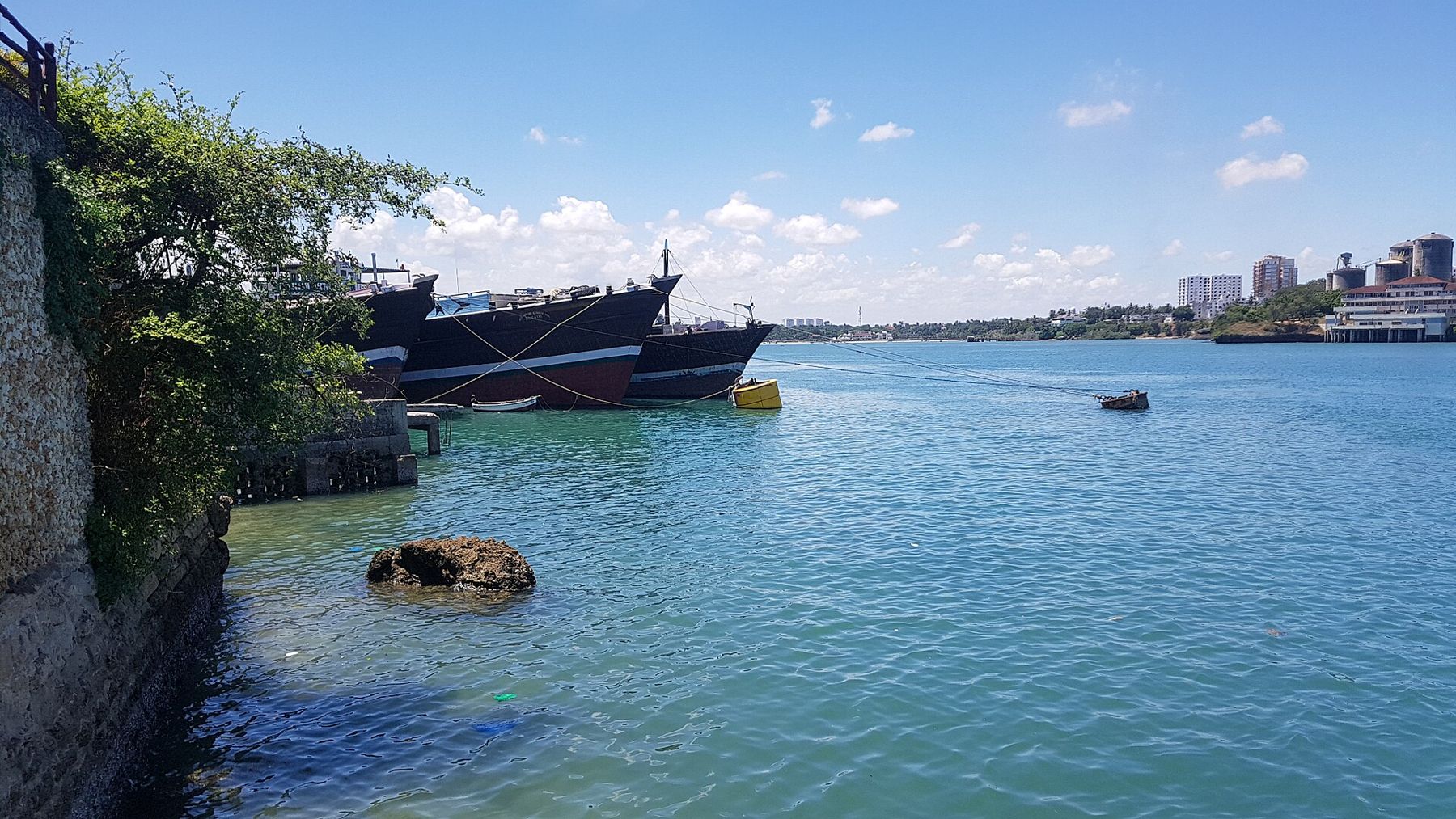
The ocean-going dhow trade is a shadow of what it was.
Still, stand at the waterfront and the shape of the old harbour is clear: a sheltered inlet, a channel running out past the fort, and the town climbing up behind. The story dhows, then and now tells more about the boats that once filled it.
Mombasa · Stone townsFort Jesus, wall by wallMosques, graves and quiet places
The Old Town has many mosques, some very small. The best known is the Mandhry mosque, near the Old Port, generally described as the oldest mosque still in use in Mombasa, with a distinctive minaret. These are working places of worship, and visitors who are not there to pray should admire them from the outside unless invited in. Do not walk into a mosque, or photograph people at prayer, without permission.
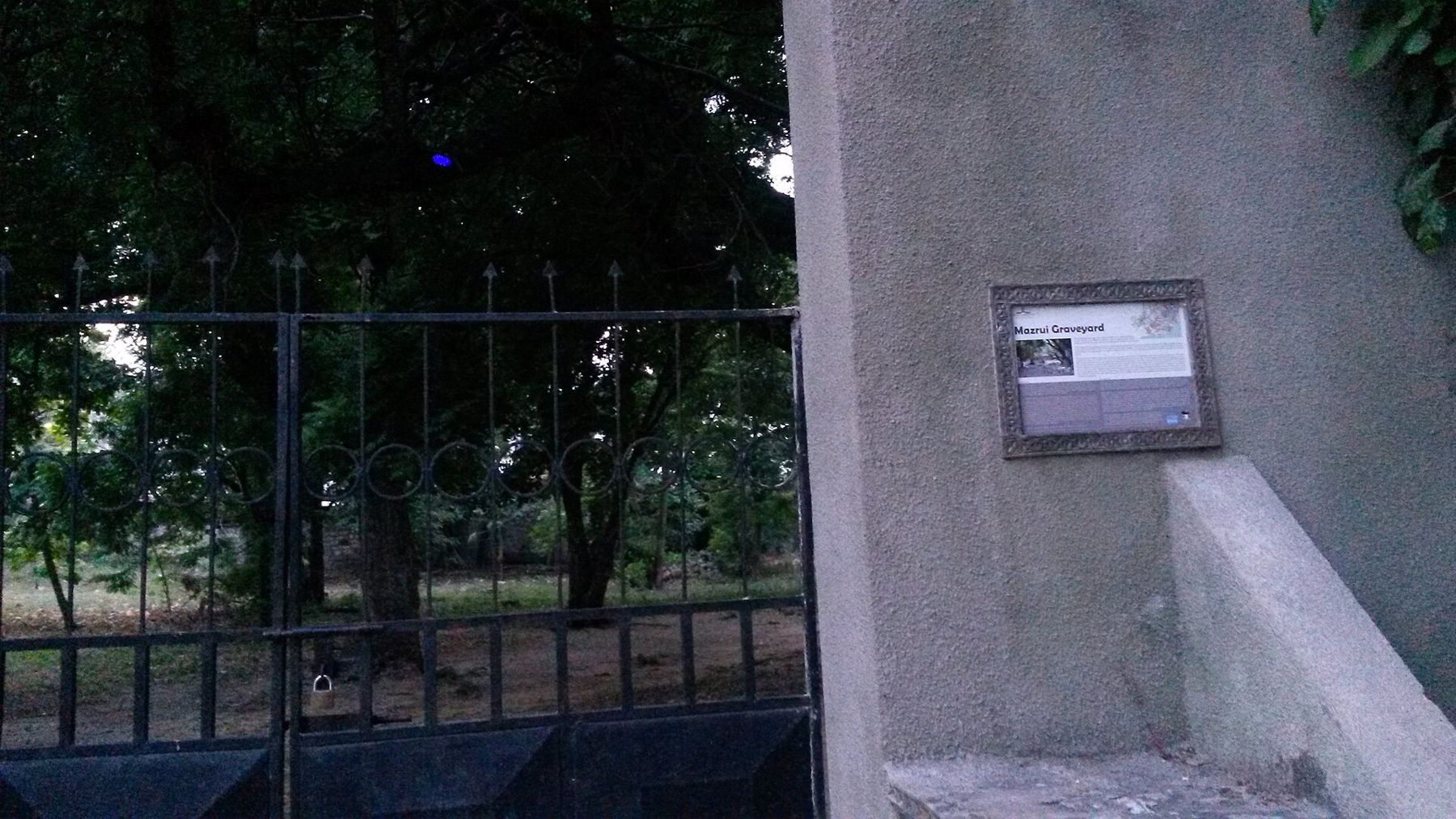
Elsewhere you will come across walled burial grounds, among them the Mazrui graveyard, associated with the family who governed Mombasa under Omani rule. A plaque by its gate gives a short history. It is a quiet place, and should be treated as one.
Markets and the life of the lanes
The Old Town is not a museum, and its liveliest corners are its everyday ones. Small shops sell spices, cloth, perfume oils and household goods; tailors work in doorways; children walk to school and men sit on the stone benches, called baraza, built along the fronts of houses for talk in the shade. These benches are part of how the street is used, so do not treat them as seats for a picnic.
Just beyond the Old Town, the streets lead towards the city's main markets, busier and noisier, where fruit, vegetables and fish change hands. A short walk from the quiet lanes into that bustle shows how the old trading town still feeds into a working city.
Dress, photographs and getting round
The Old Town is a largely Muslim neighbourhood, and the manners that go with it are simple. Cover shoulders and knees in town, whatever you wear on the beach, and avoid tight or see-through clothes. During Ramadan, avoid eating, drinking or smoking openly in the street in daylight.
- Ask before photographing people, and accept a no gracefully.
- Buildings and streets are generally fine to photograph; doorways of private homes are people's homes, so do not linger or step inside.
- Carry small amounts of cash and keep a bag closed and in front of you in busy lanes.
- Walk in daylight. The lanes are quieter and darker after nightfall.
Local guides offer walking tours from near the fort, and a good one adds stories you would not find alone. Agree the fee and the length of the walk before you start.
Begin or end at Fort Jesus, which explains why the town grew where it did. For a closer look at the carved doors you pass, read Swahili doorways and what is carved on them, and if the Old Town leaves you wanting more, the old town of Lamu, reached in arriving in Lamu by water, is the same idea on a larger scale and without cars.
Every photograph here was shared under an open licence; the photographers are named on the pictures-by page.