South coast · Shoreline
A cooler morning above the beaches: the Shimba Hills
Half an hour inland from the south coast beaches, a green plateau holds coastal forest, open grassland, sable antelope and a waterfall you reach on foot with a ranger.
- The tide
- Tide hardly matters
- From Mombasa
- About 35 km southwest by ferry and road
- Kindest months
- Dry months, early mornings
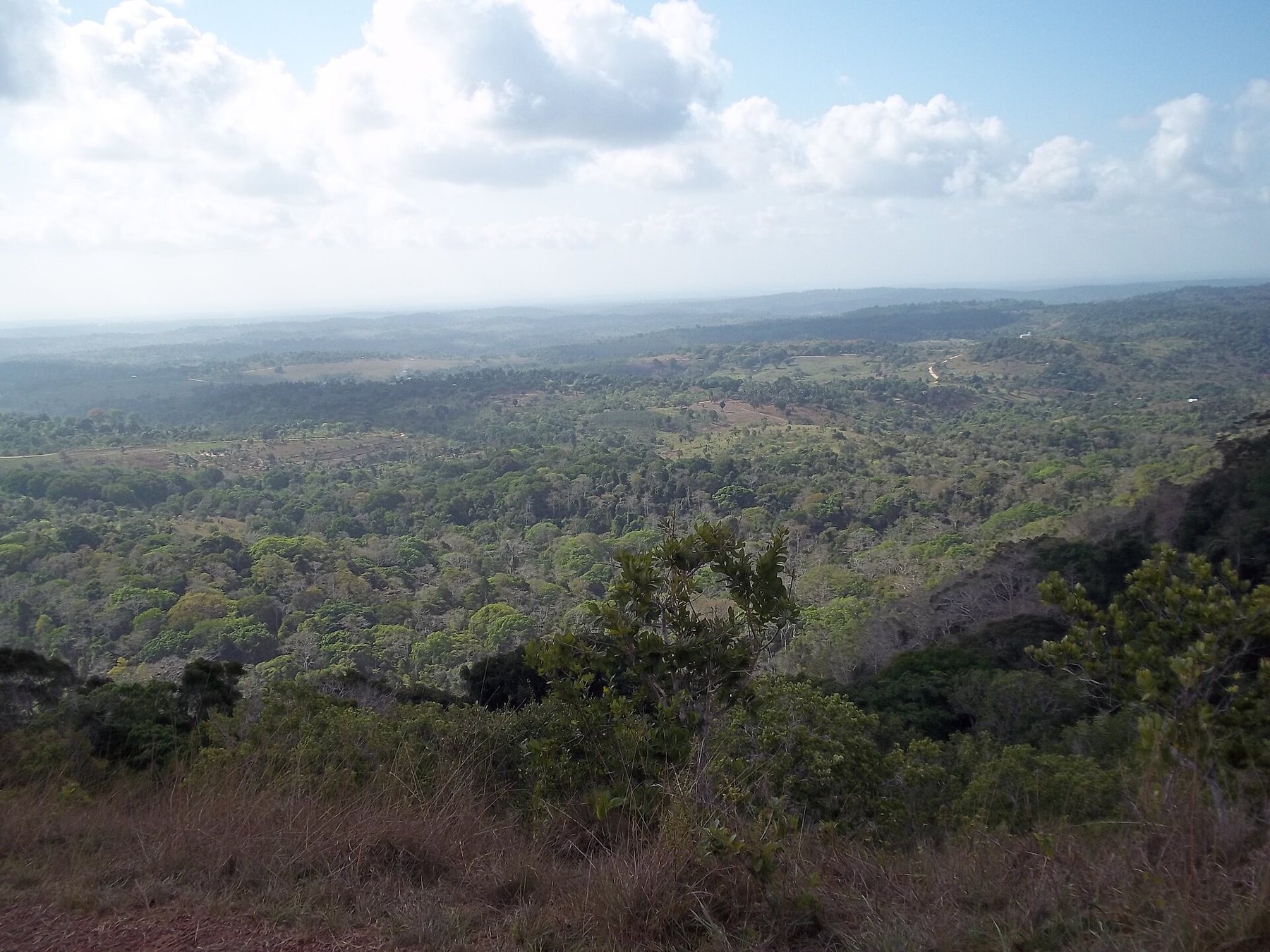
Stand on the beach at Diani in the middle of the morning and look inland. Behind the palms and the roofs, a long green shoulder of land rises against the sky. That is the Shimba Hills, a plateau a few hundred metres above the sea, and on most days it is a little cooler, a little breezier and a great deal quieter than the sand below. The road climbs out of the coastal heat through farms and villages near Kwale, and somewhere on the way up the air changes.
The plateau is protected as the Shimba Hills National Reserve, managed by the Kenya Wildlife Service. It is small by Kenyan standards and it is not a savanna park: there are no great herds here and no long game drives across open plains. What it has instead is a patchwork of coastal forest and rolling grassland, a few viewpoints that look all the way down to the reef line, and animals you will not easily see anywhere else on the coast.
Forest, grass and the view to the sea
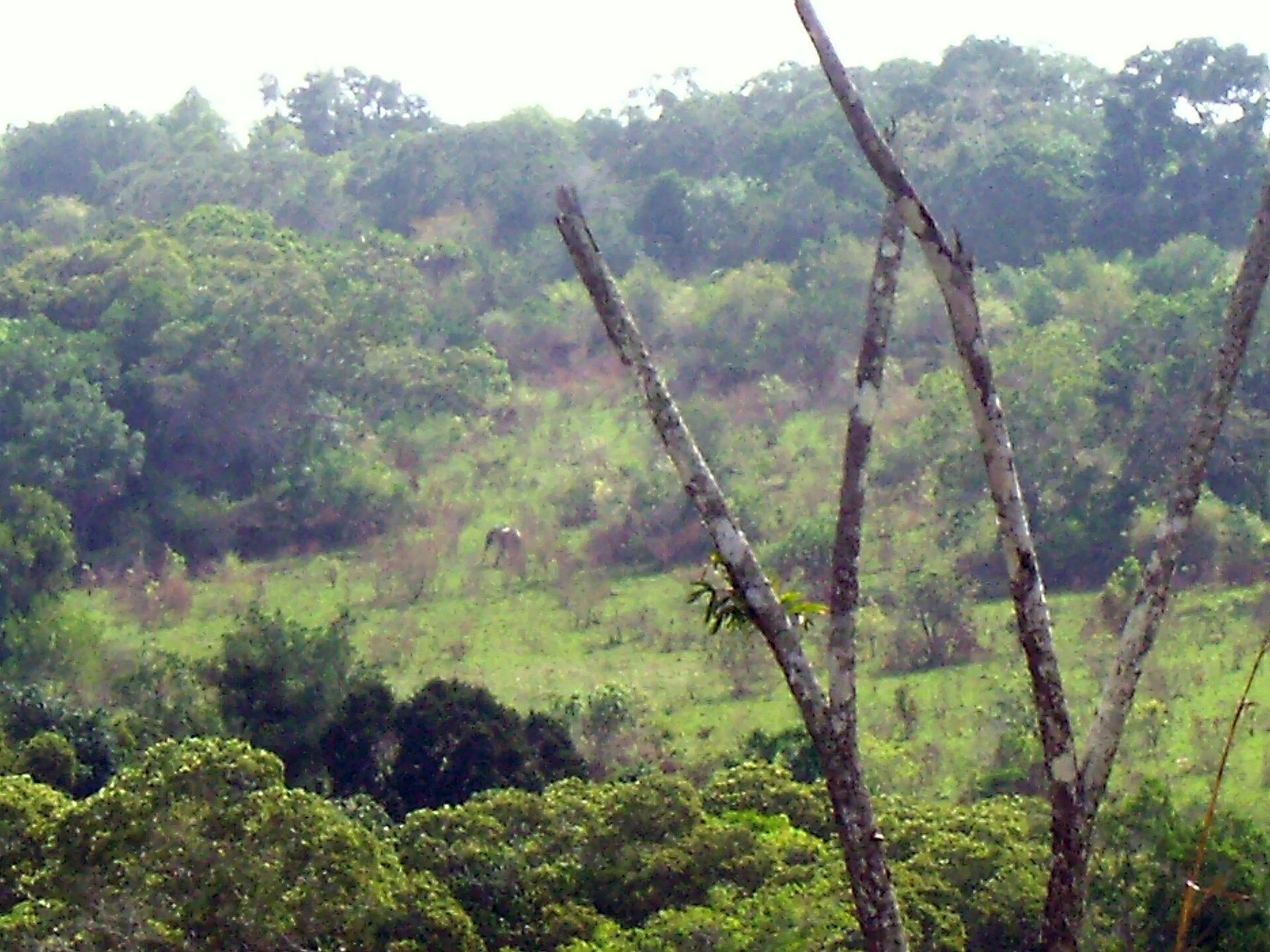
The reserve is a mosaic. Patches of tall, closed forest fill the valleys and hollows, and between them run open grasslands that turn gold in the dry months and a deep, wet green after the rains. This mix of habitats is the reason the plateau matters: coastal forest of this kind once ran in fragments up much of the Kenyan shore, and much of it has been cleared for farms and building. What survives on the hills is one of the larger remaining blocks.
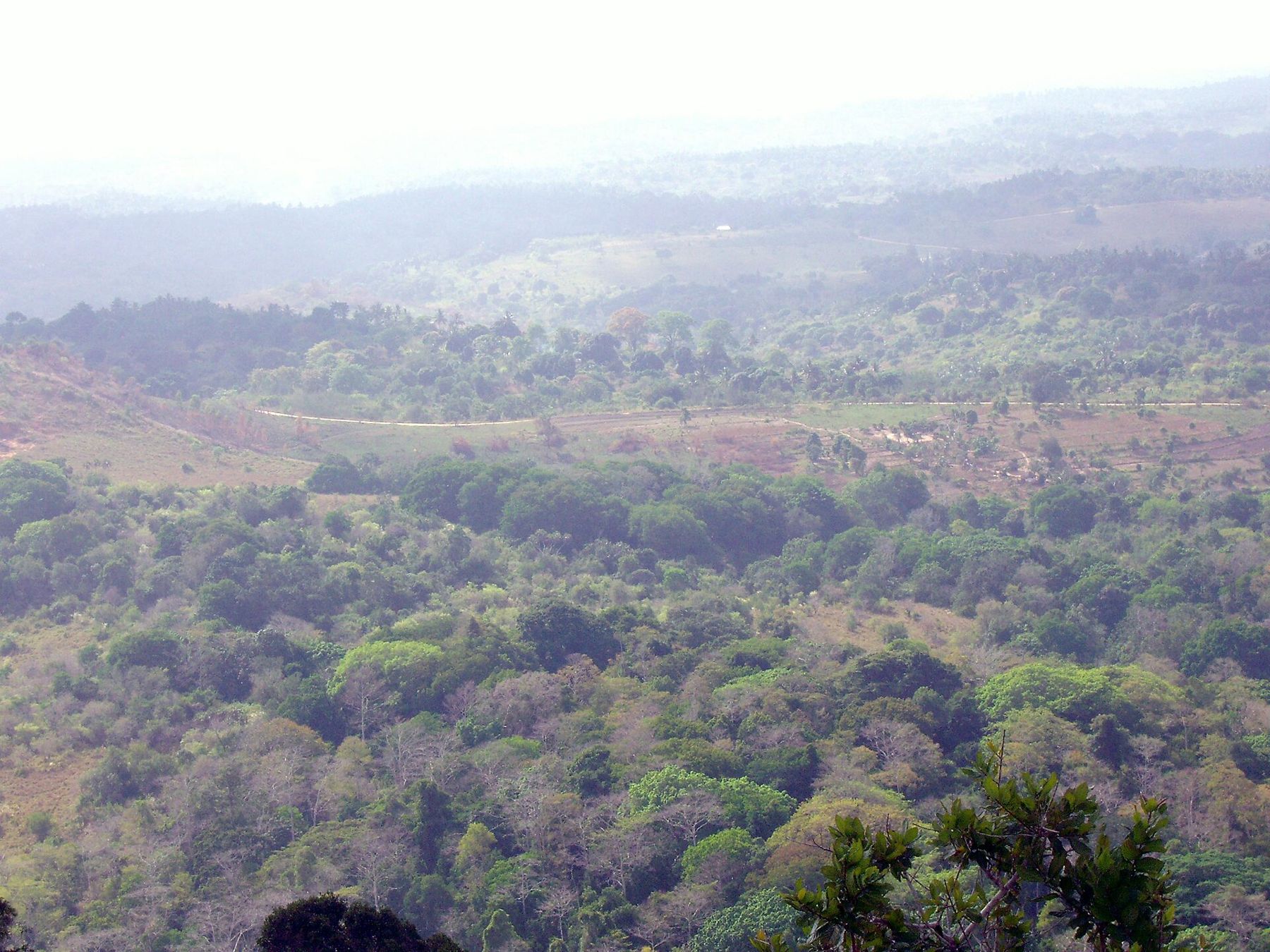
From the higher viewpoints you can see the whole story of the south coast laid out. The farmland drops away below you, the strip of palms marks the shore, and on a clear morning the white line of surf shows where the fringing reef sits offshore. It is a useful view before you spend a week on the beach, because it shows how narrow the coastal strip really is.
Why it is cooler up here
Height is part of it, and the breeze off the Indian Ocean has nothing in its way once it reaches the top of the escarpment. Mornings can be soft and misty, and a light layer is not a silly thing to pack. By midday the sun is strong again, so the early hours are the ones to aim for.
Sable antelope and the other residents
The animal people come for is the sable antelope. In Kenya the Shimba Hills are the place most associated with it: a large, dark antelope with a pale face pattern and long horns that sweep back in a curve. Males darken almost to black as they age; females and young are a warmer chestnut. They graze the open grassland, often in small groups, and early morning or late afternoon gives you the best chance of finding them.
Elephants live on the plateau too, and they move between the reserve and the land around it along a forested corridor to the north. You may see them, or you may see only what they leave behind: broken branches, flattened grass and dung on the track. Buffalo, bushbuck, warthog and several kinds of monkey share the reserve, and the forest is good for birds. Wildlife is never guaranteed, and the forest hides animals well, so treat any sighting as a bonus rather than the point of the trip.
Wildlife is never guaranteed, and the forest hides animals well, so treat any sighting as a bonus rather than the point of the trip.South coast · Winds and rainsA rainy-season week on the south coast
The walk down to Sheldrick Falls
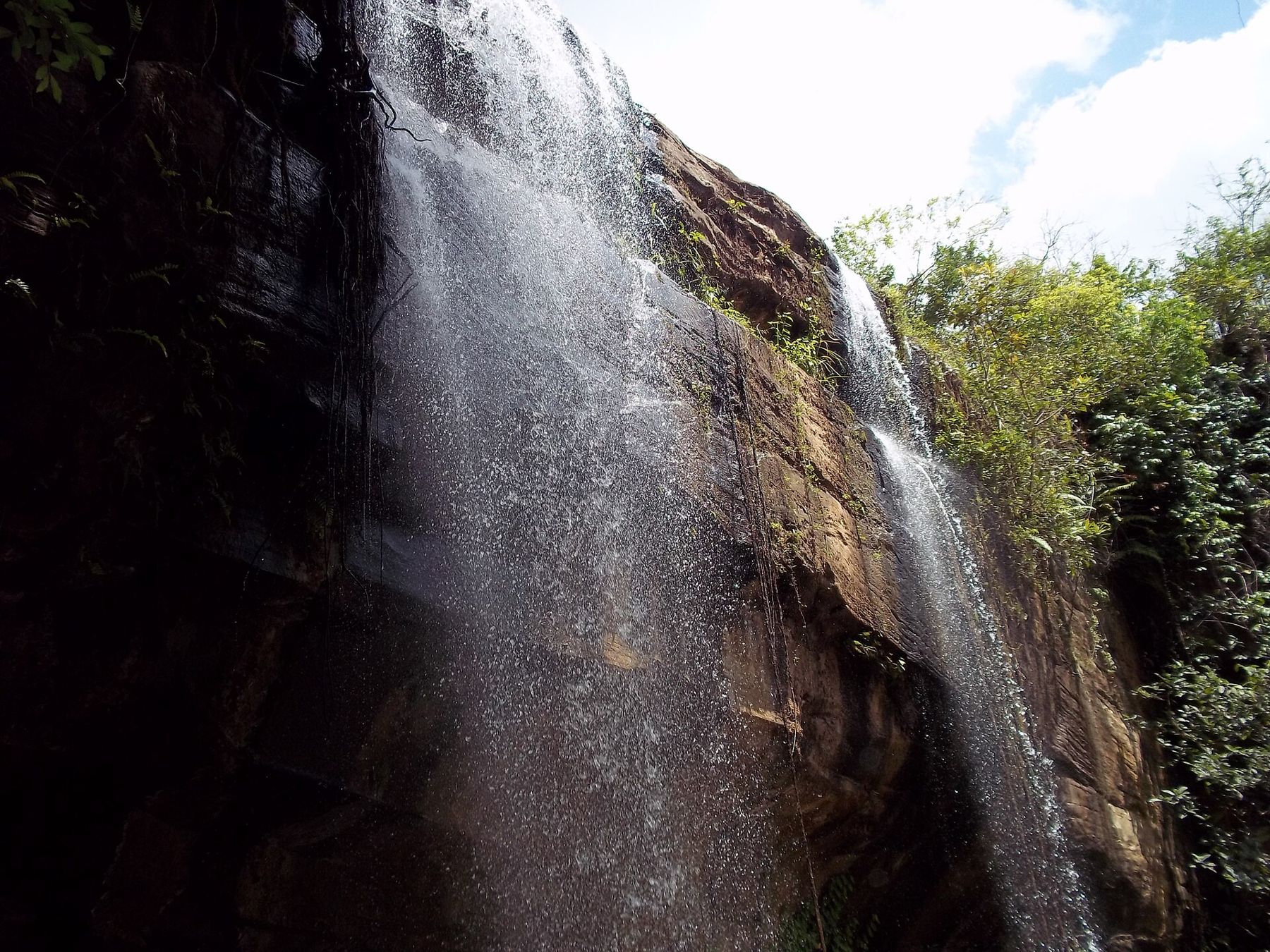
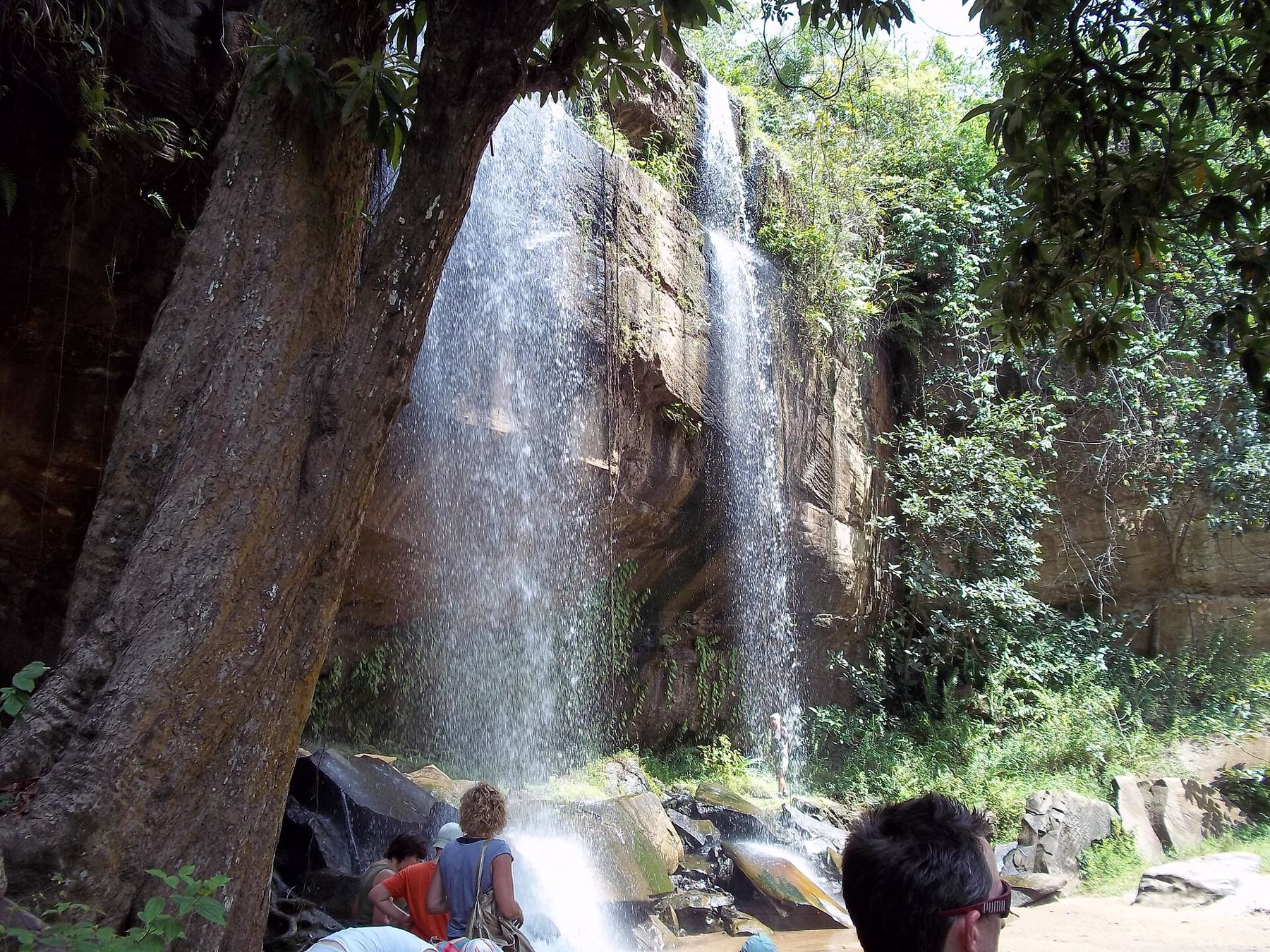
The best-known outing in the reserve is the walk to Sheldrick Falls. From a car park on the plateau a trail drops through the forest to a stream, where water slides over a sandstone lip into a pool below. It is not a long walk, but the path is steep in places, and the climb back up in the warmth of the day is what tires people. Allow a couple of hours for the round trip at an easy pace.
Because there are elephants and buffalo in the forest, the walk is done with an armed ranger from the wildlife service. A notice at the trailhead says as much, and asks that walkers be fit enough for the slope. Arrange the escort at the gate or the reserve office when you arrive; how it is booked and what it costs can change, so check before you go.
- Wear shoes with grip; the path can be loose and, after rain, slippery.
- Carry water, even for a short walk, and a hat for the climb out.
- Follow the ranger's lead on where to stop and how close to go to any animal.
- The pool is tempting, but ask the ranger before you think of getting in.
Reaching it, and moving along the shore
The reserve lies inland from Kwale, and the usual approach is from the south coast beaches at Diani and Ukunda, a short drive up the hill. From Mombasa island the trip begins with the Likoni ferry across the harbour mouth to the south mainland, then the coast road south and the turn inland. Traffic at the ferry varies through the day, so leave early if you are coming from the city.
Inside, the tracks are unpaved, and some sections become muddy and slick in the wet season. A vehicle with good clearance is the sensible choice, and four-wheel drive helps after rain. Entry fees are paid to the wildlife service at the gate, and the methods of payment accepted have changed in recent years, so check the current arrangements before you go rather than counting on cash.
When to go, and what the rains do
The plateau catches rain from the ocean, which is why it is so green. The long rains usually arrive around April and May, and the shorter rains come around November; the exact timing shifts from year to year. In the wet months the hills are at their lushest, the falls run fullest and the dust settles, but tracks can be difficult and some walks may be closed. Read the story of a rainy-season week on the south coast for what those weeks feel like lower down.
In the drier months, roughly from the end of the year into March and again in the middle of the year, the grass is shorter and animals are easier to pick out. Whatever the month, go early. The light is softer, the animals are more active and the ranger walk is pleasanter before the heat builds.
A morning on the hills pairs well with an afternoon by the water. You can be back at the beach for the falling tide described in Diani by the tide table, or spend the next day further south on the boats to Wasini and the Kisite marine park. The plateau, though, is the place that shows you the coast from above, and it is worth the early start.
Every photograph here was shared under an open licence; the photographers are named on the pictures-by page.