South coast · Shoreline
Diani by the tide table
The long beach south of Mombasa changes twice a day. Learn its tides and you know when to walk the lagoon, when to swim, and when to sit under the trees.
- The tide
- Go at low water
- From Mombasa
- About 30 km south by ferry and road
- Kindest months
- December to March, October
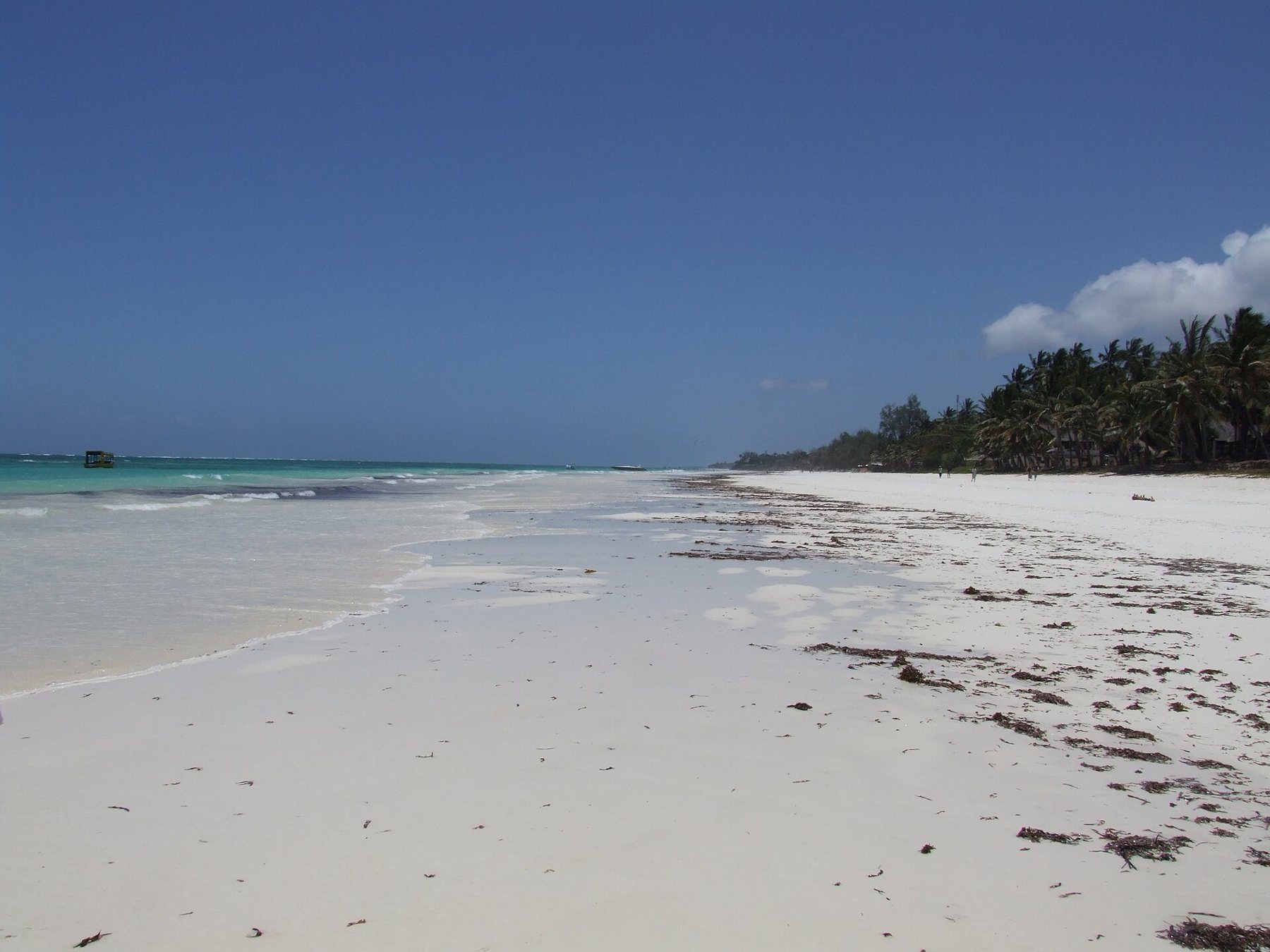
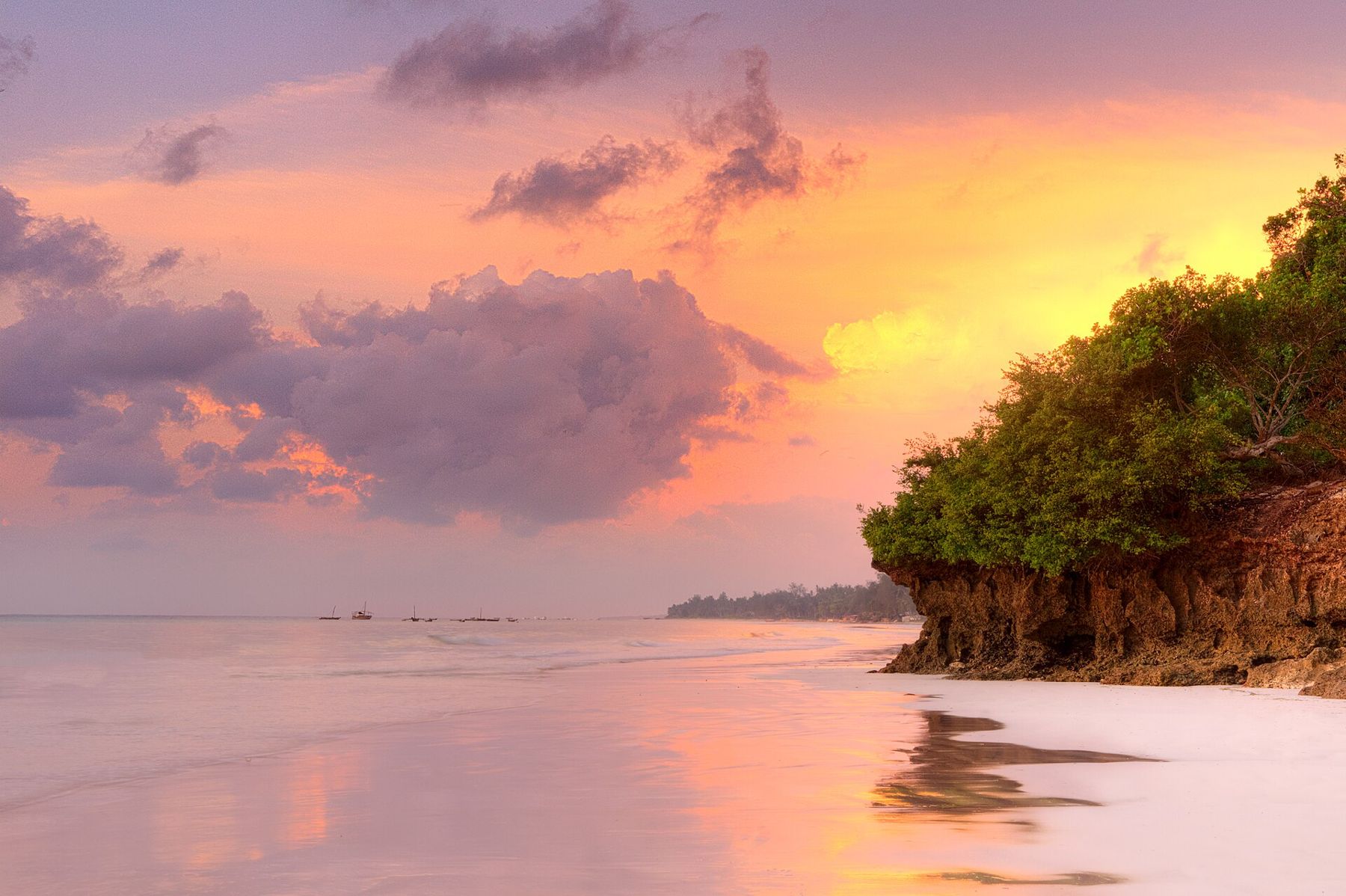
Diani is a long, straight beach of fine white sand on the south coast, running for kilometres with coastal forest and palms behind it and a coral reef a short way offshore. Between the sand and the reef lies a shallow lagoon. Everything about a day here depends on that lagoon, and the lagoon depends on the tide.
Twice a day the sea drains away from the reef flats and twice a day it comes back. At low water you can walk out across sand and seagrass to pools near the reef edge. At high water the same ground is under clear, swimmable sea. Neither is better than the other; they are simply different beaches, and a visitor who knows which one is coming has the best of both.
How the tide works here
Tides on this coast run on a cycle of roughly twelve and a half hours, so low water comes about an hour later each day. The range is largest around new moon and full moon, the spring tides, when the lowest lows uncover the most reef and the highest highs reach furthest up the sand. In the week between, at neap tides, the difference is smaller and the lagoon never quite empties.
Tide tables for the Kenyan coast are easy to find and easy to read: two lows and two highs a day, each with a time. Ask wherever you are staying, or look one up before you arrive, and plan the day around it rather than around the clock.
A simple pattern works for most days. If low water falls in the morning, walk the lagoon early while the sand is cool, then swim after lunch as the sea returns. If low water falls in the afternoon, swim first and walk later, and finish on the sand as the light goes. Around spring tides the lows are lowest at roughly the same times of day each fortnight, which makes planning a week easier than it sounds.
One beach, several names
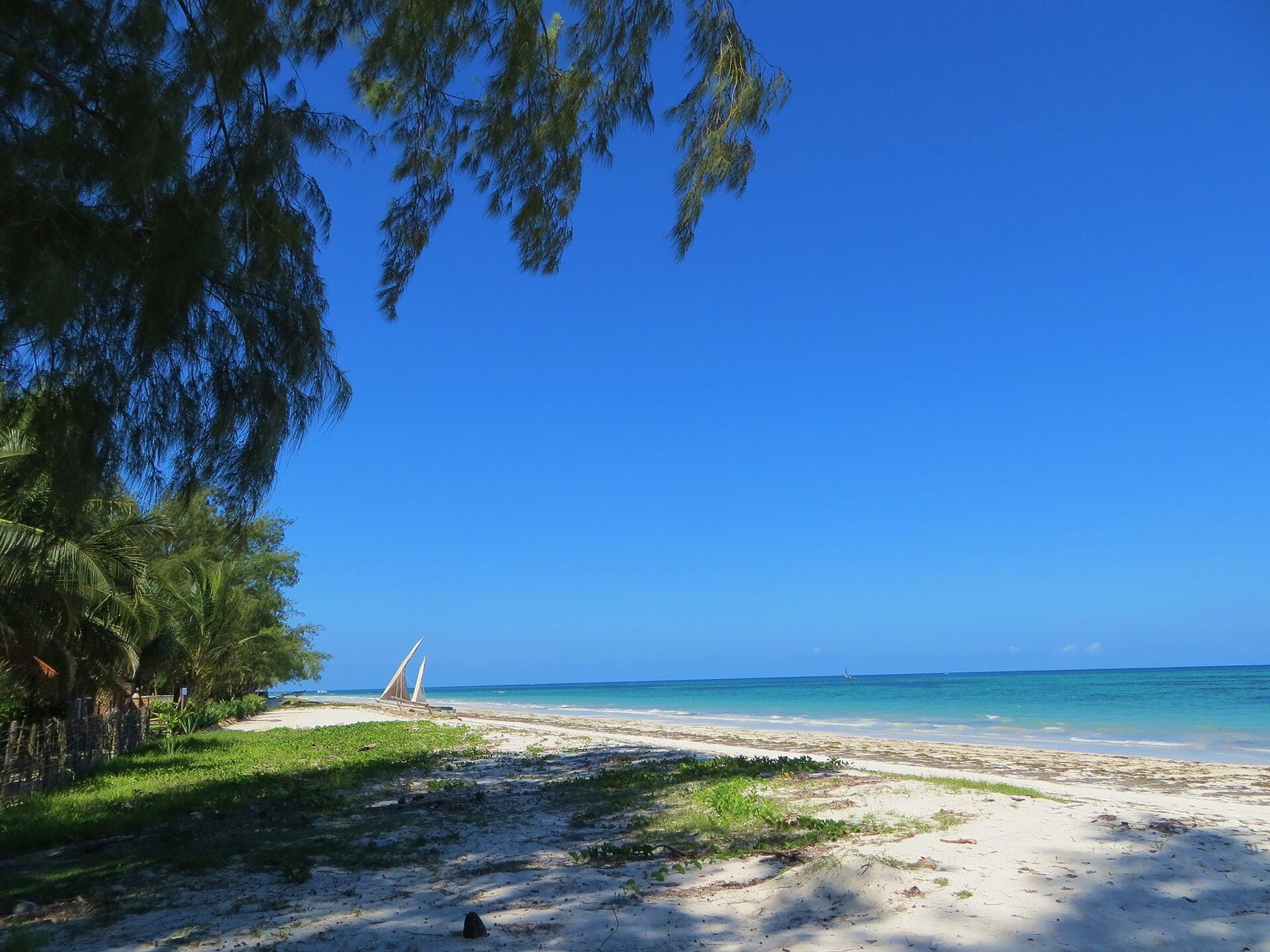
The sand runs almost unbroken for many kilometres. Its southern end is often called Galu, quieter and with more trees along the shore; to the north the beach runs towards the Mwachema river and, beyond it, Tiwi. The reef follows the whole length, closer to shore in some places than others, so the lagoon is wider and shallower in one stretch and narrower and deeper in the next. Walk a few kilometres at low water and you will see the difference.
Low water: the lagoon on foot
When the tide falls, the lagoon becomes a place to walk. Pools form among the seagrass, small fish trap themselves in the shallows, and starfish, sea cucumbers and crabs show themselves. Walk slowly, look rather than lift, and leave everything where you find it.
Stepping on the reef flat
Sea urchins with long black spines sit in the pools and in crevices, and a step on one is painful for days. Reef shoes or old trainers are worth wearing, and it is better to walk on sand than on living coral. The reef walks without harming the reef story goes into this in more detail.
- Note the time of low water and start back well before the tide turns.
- Do not wade out to the reef edge itself; the surf there and the currents through gaps in the reef are dangerous.
- Carry nothing you would mind losing, and keep your phone dry.
Neither is better than the other; they are simply different beaches, and a visitor who knows which one is coming has the best of both.The whole coast · Reefs and creeksReef walks without harming the reef
High water: swimming, and the colobus in the trees
As the tide comes back the lagoon fills quickly. At high water you can swim properly over sand, in water that is usually calm because the reef breaks the swell. This is the time to be in the sea. Swim where others swim, keep away from channels and gaps in the reef where water runs out fast, and on days when red flags or local advice say not to, stay on the sand.
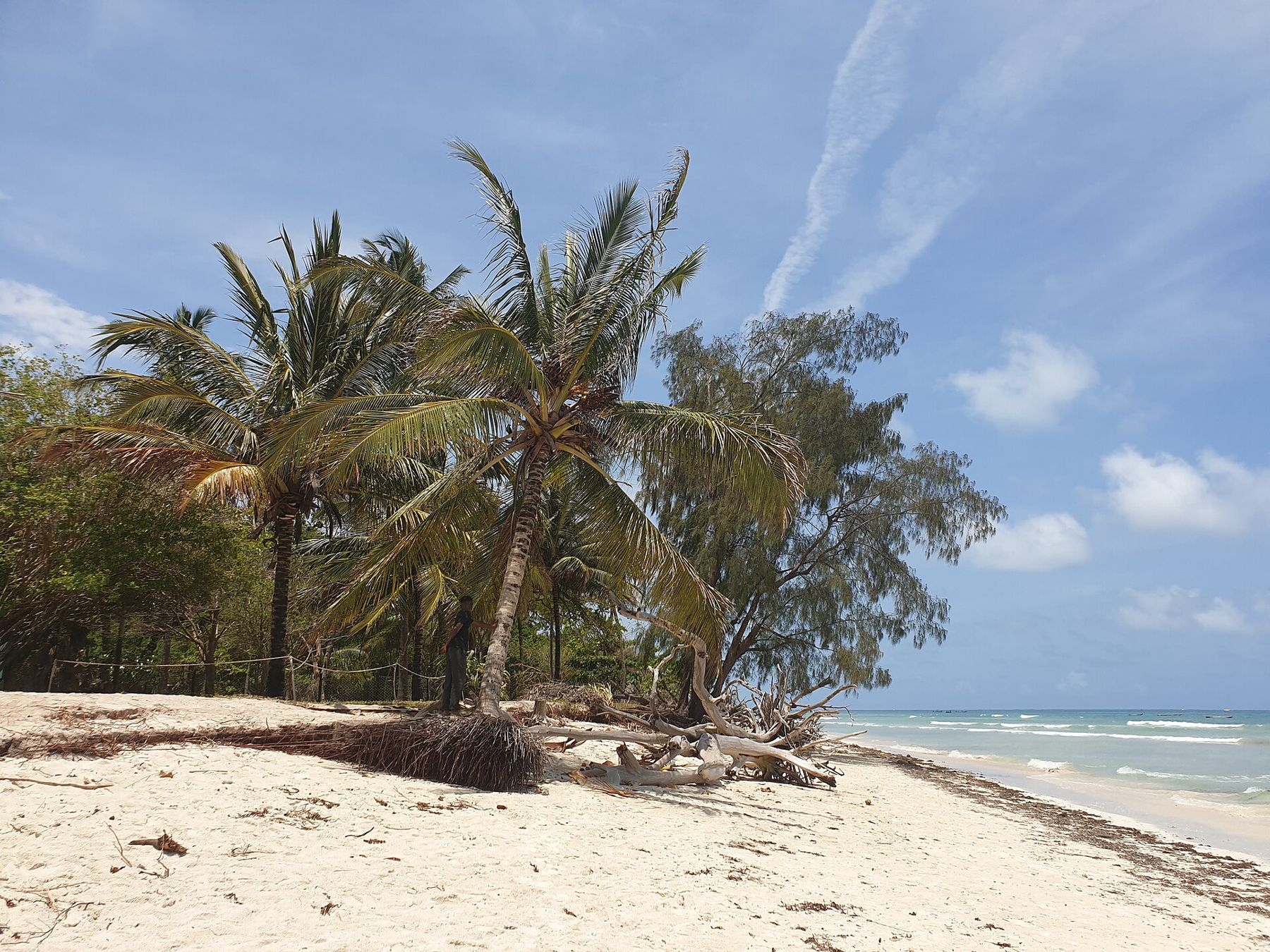
When you come out, look up. The strip of coastal forest behind the beach is home to the Angolan colobus, a black-and-white monkey with a long white mane and tail, as well as Sykes' monkeys, vervets and baboons. Diani's main road cuts through their habitat, and rope bridges have been strung across it so that monkeys can cross above the traffic rather than on the tarmac. Drive slowly along that road and do not feed the monkeys anywhere; fed monkeys become bold, and bold monkeys get hurt.
Seaweed season and the two winds
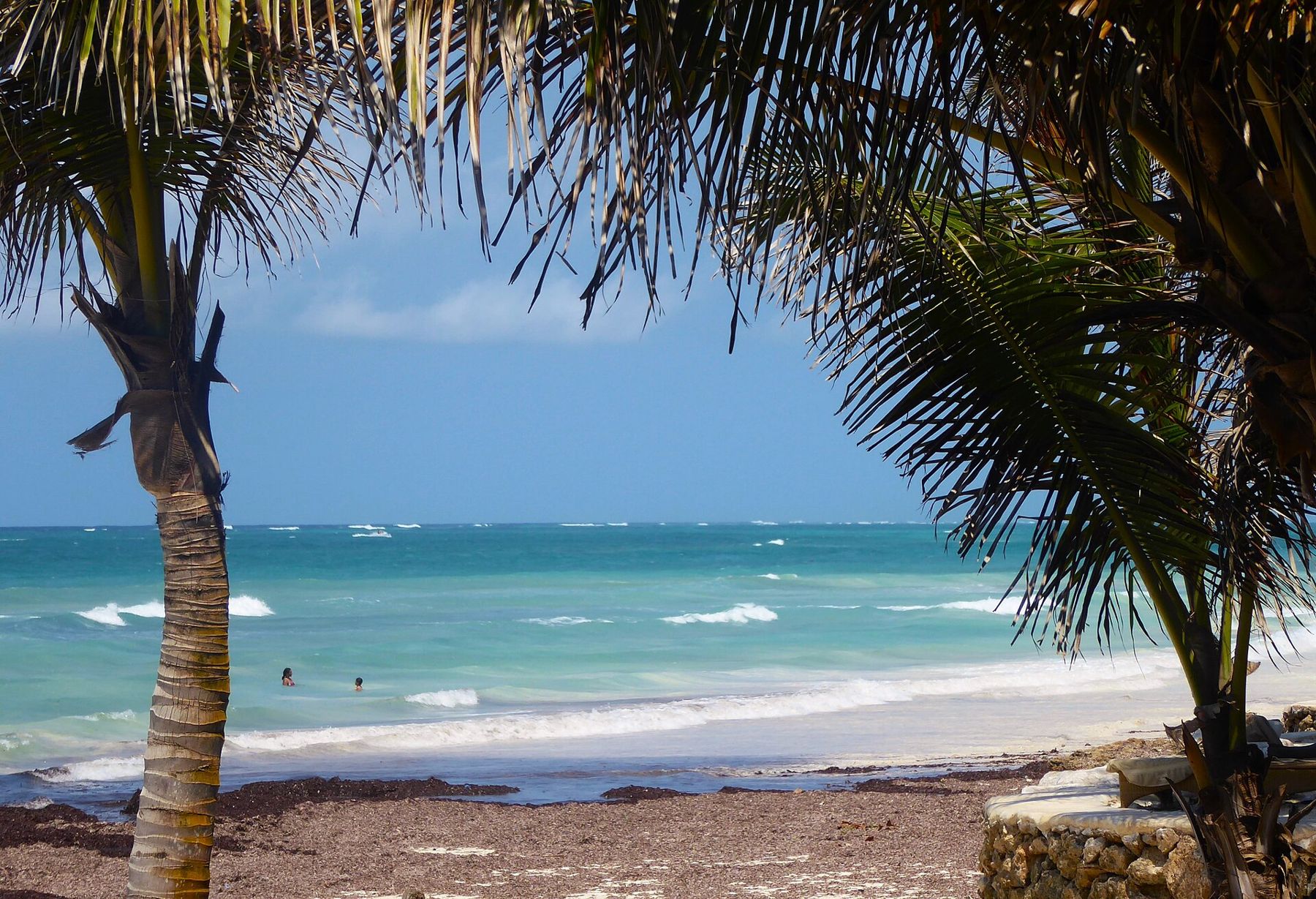
Diani's sand is not white all year. During the months of the kusi, the southeast monsoon that blows roughly from about June to September, the wind and swell push seaweed onto the beach, sometimes in thick banks along the tide line. The water can be cloudier and rougher, and the lagoon less inviting. In the kaskazi months, the northeast monsoon from around December to March, the sea is usually calmer and clearer and the beach cleaner.
None of this is fixed to the day, and some years are better than others. The kaskazi and kusi month by month story sets out the pattern for the whole coast.
Beach sellers, valuables and the sun
You will be approached on the sand by people selling boat trips, carvings, fruit and other things. Many are friendly and some are persistent. A polite, clear "no, thank you", said once and repeated if needed, is usually enough; there is no need to be rude, and no need to stop and negotiate if you are not interested. If you do want a boat trip, arrange it through a source you trust rather than on the sand.
- Leave passports and spare cash locked away, and take little to the beach.
- Avoid walking empty stretches of the beach after dark.
- The equatorial sun is strong even on a cloudy day; cover up at midday.
Lock rooms and cars, as you would anywhere, and keep an eye on bags left on the sand while you swim. If something does go wrong, report it to the police and to wherever you are staying; most visits pass without any trouble at all.
Diani makes a good base for the rest of the south coast. The Shimba Hills rise just inland, and the boats to Wasini and the Kisite marine park leave from Shimoni further south; read a cooler morning above the beaches before you plan a day up the hill. But give the beach itself a few days and a tide table, and it will show you two faces in every twenty-four hours.
Every photograph here was shared under an open licence; the photographers are named on the pictures-by page.