North coast · Shoreline
Why the sea at Malindi changes colour
Some days the bay at Malindi is blue, some days it is the colour of milky tea. The difference comes down a long river from inland Kenya, and it explains much about the town.
- The tide
- Any state of tide
- From Mombasa
- About 120 km north by road
- Kindest months
- December to March, clearer water
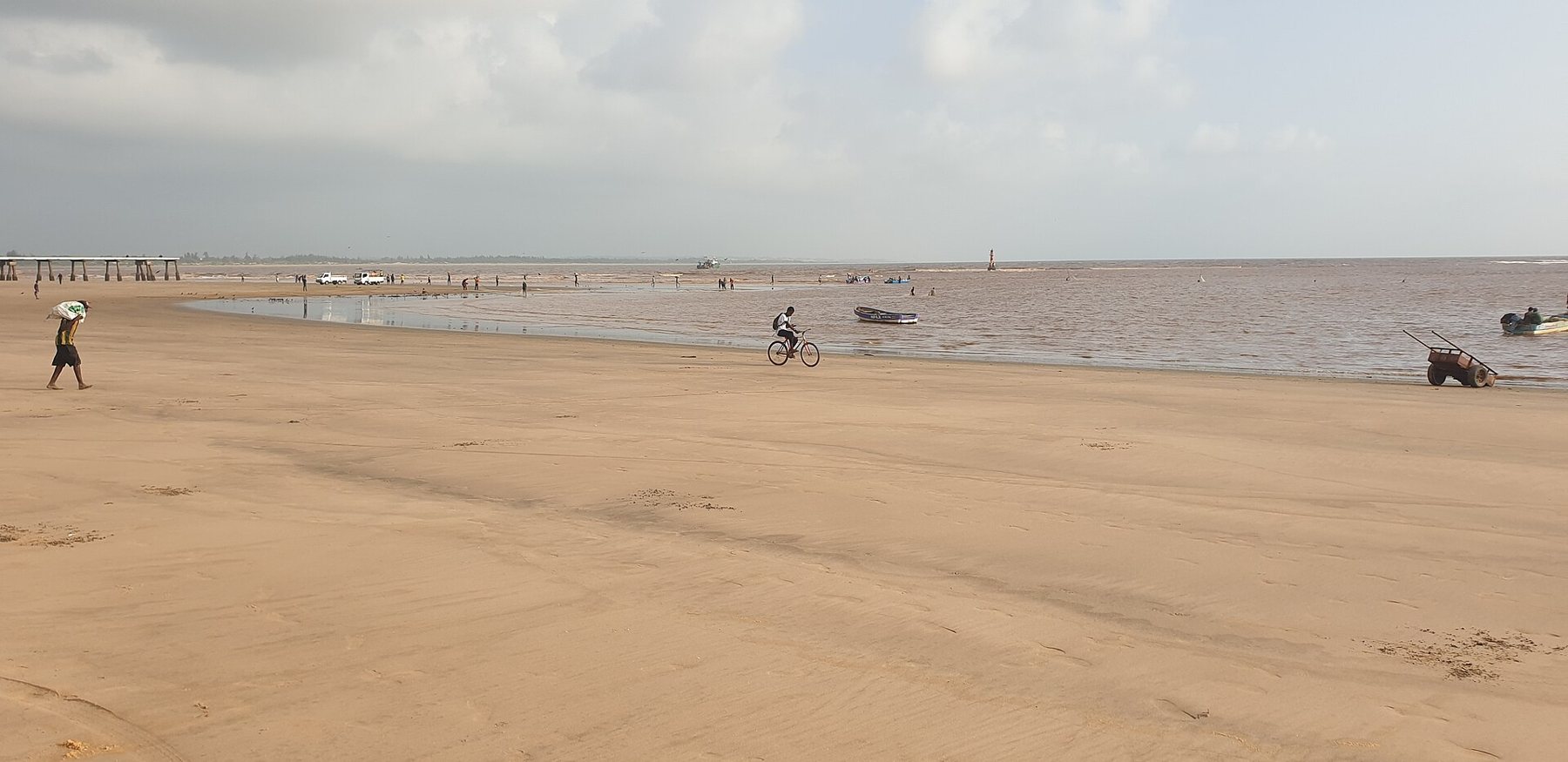
Arrive in Malindi after the long rains and the first thing you may notice is the sea. Instead of the clear blue-green you saw further south, the water close to shore is brown, almost red in some lights, with a sharp line far out where it meets bluer water. The sand looks darker too. Nothing is wrong with it. You are looking at the work of a river.
A river that carries the hills to the sea
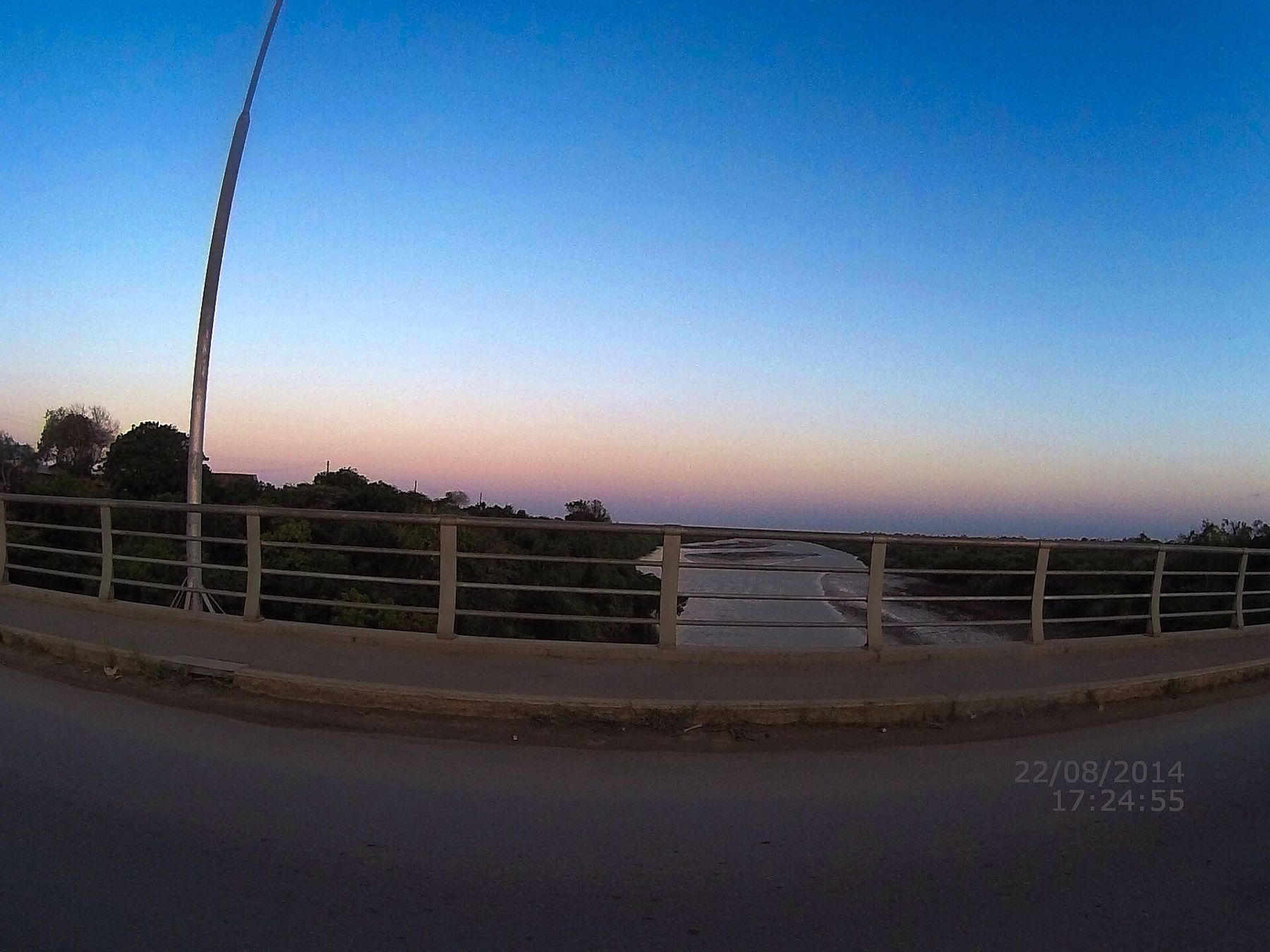
Just north of the town, the Sabaki river reaches the Indian Ocean. Upstream it has another name, the Galana, and before that the Athi, rising far inland in the highlands near Nairobi and crossing the dry country of Tsavo on its way to the coast. Along the way it picks up soil. In the dry months the flow is small and the load is light, but when the rains come the river swells and carries huge amounts of red-brown silt down to its mouth.
Once the water reaches the sea, the currents along this part of the coast carry much of that silt south into Malindi Bay. Heavy rain inland, sometimes far from the coast, can colour the bay for weeks. That is why Malindi's sea can look so different from the clear lagoons of Diani or Watamu, even though they are not far apart.
What the silt does
The colour is the visible part. Underneath, the silt settles on the sea floor and on any coral close enough to catch it. Corals need clear water and light, and a heavy, lasting load of sediment stresses them. Over decades, changes in land use upstream have sent more soil down the river than before, and that is one of the pressures on the reefs near the town.
The silt also builds land. Sandbanks and beaches near the river mouth shift with each flood, and the shoreline here moves more than on most of the coast. The mouth itself, with its sandbars, mudflats and channels, is good country for waterbirds. Waders, terns and gulls gather on the flats, especially when the tide is low, and the bushes along the river hold smaller birds.
When the water is clearer
For swimming and snorkelling, timing matters. The months of the northeast wind, the kaskazi, from around December to March, usually bring calmer, clearer water, and the river is low. The long rains, around April and May, and the short rains, around November, are when the bay is most likely to turn brown. For the bigger picture of the seasons, see the coast's two winds, month by month.
None of this is fixed. A dry year can leave the bay blue long after the usual rains, and a storm far inland can colour it in a month that ought to be clear. If clear water is the point of your visit, ask locally what the sea is doing before you plan a boat trip.
Malindi Marine National Park
South of the town, the reefs are protected as Malindi Marine National Park, one of the oldest marine parks in Kenya, with a wider marine reserve around it. The coral gardens lie offshore, reached by boat, and on a good day you can snorkel among reef fish and see turtles. When the river is high, visibility falls, sometimes a long way. Fees are paid to the Kenya Wildlife Service, and the arrangements for paying them change, so check before you go.
The usual reef rules apply: do not stand on coral, do not touch or take anything, and keep fins clear of the reef. If you are not a strong swimmer, wear a life jacket or a float vest, and ask about currents before you get in. Agree what a boat trip includes, and what it will cost, before you leave the beach.
The pillar on the point
In 1498 Vasco da Gama's ships reached Malindi on their way round Africa to India. Mombasa had been hostile, but the ruler of Malindi received the Portuguese well, and the town gave them a pilot who knew the route across the ocean to India. In return da Gama's men set up a pillar, and the white column on the headland south of the town carries that story today. It is a tapering stone shaft topped by a cross, standing on a low platform above the sea.
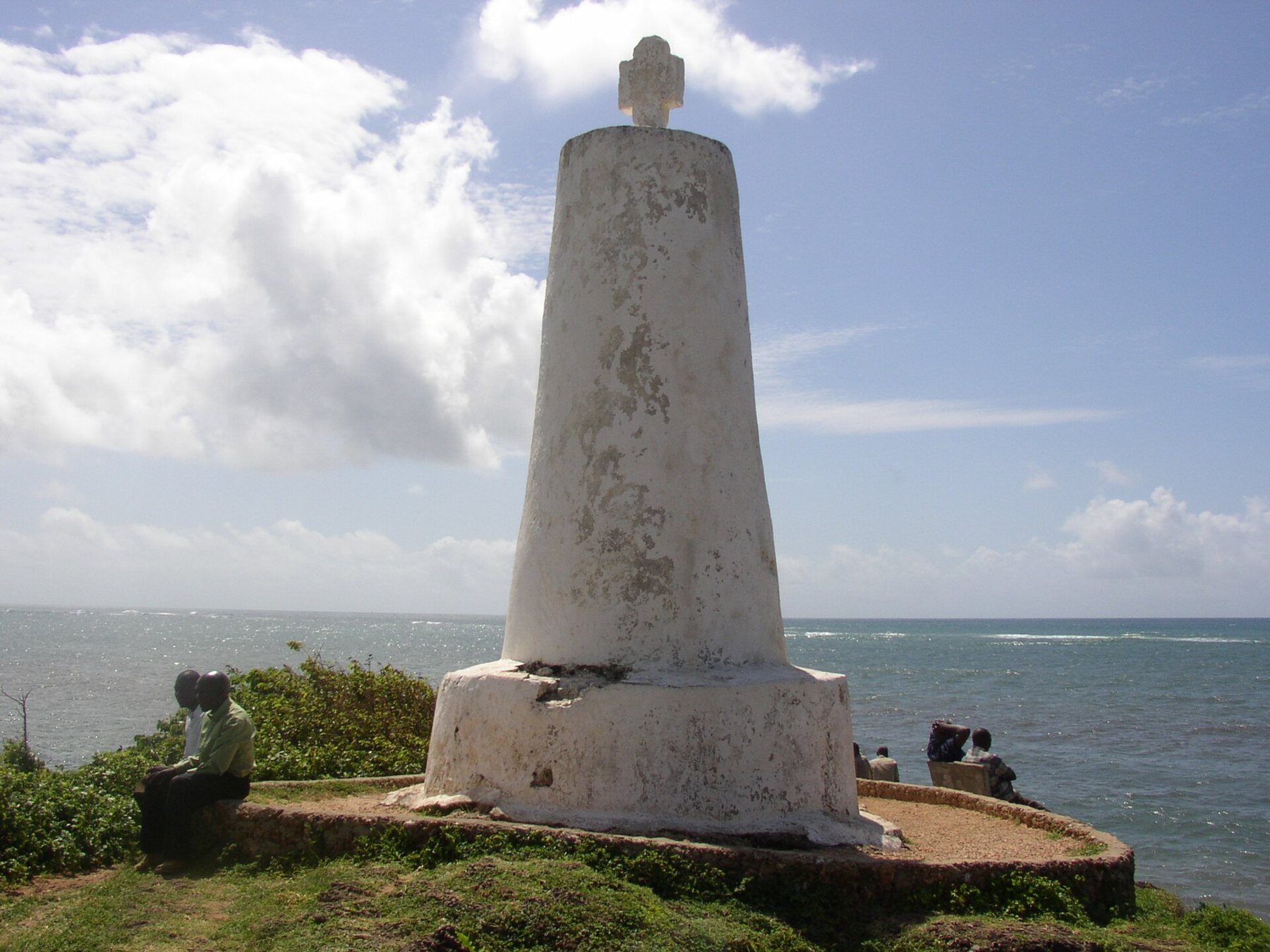
Walk out to it in the late afternoon, when the light is softer and the wind is up. From the platform you can look back along the bay and see, on a brown-water day, exactly where the river's colour ends and the open ocean begins.
The old town and the seafront
Behind the shore, Malindi's old town is smaller and quieter than Mombasa's, but it has the same mix of narrow lanes, coral-stone houses, mosques and pillar tombs. Near the seafront stands a small Portuguese chapel, among the oldest Christian buildings on this coast. The town is not as strict as Lamu, but modest dress in the old quarter is a courtesy worth keeping, and ask before photographing anyone.
On the main beach, mornings are busy with walkers, cyclists and fishermen, and the sand is wide at low water. Beach vendors are part of the scene; a polite no is enough. Keep valuables out of sight, and take a taxi or tuk-tuk after dark rather than walking long empty stretches.
Around Malindi
Malindi works well as a base for the north coast. A short drive south lies the coral-stone town of Gede, abandoned in the forest, and beyond it the creek and reefs of Watamu. North, the road continues towards the Tana delta and, eventually, the jetty at Mokowe where boats cross to Lamu; read arriving in Lamu by water before you go that way. Going south, the road back to Mombasa crosses the creeks described in the coast road north.
Every photograph here was shared under an open licence; the photographers are named on the pictures-by page.