North coast · Stone towns
Walking the lost streets of Gede
A few kilometres inland from Watamu, a Swahili town of coral stone lies under tall trees. Its mosque, palace and houses still stand to shoulder height, and the forest is quiet around them.
- The tide
- Tide hardly matters
- From Mombasa
- About 100 km north by road
- Kindest months
- Dry months, early morning
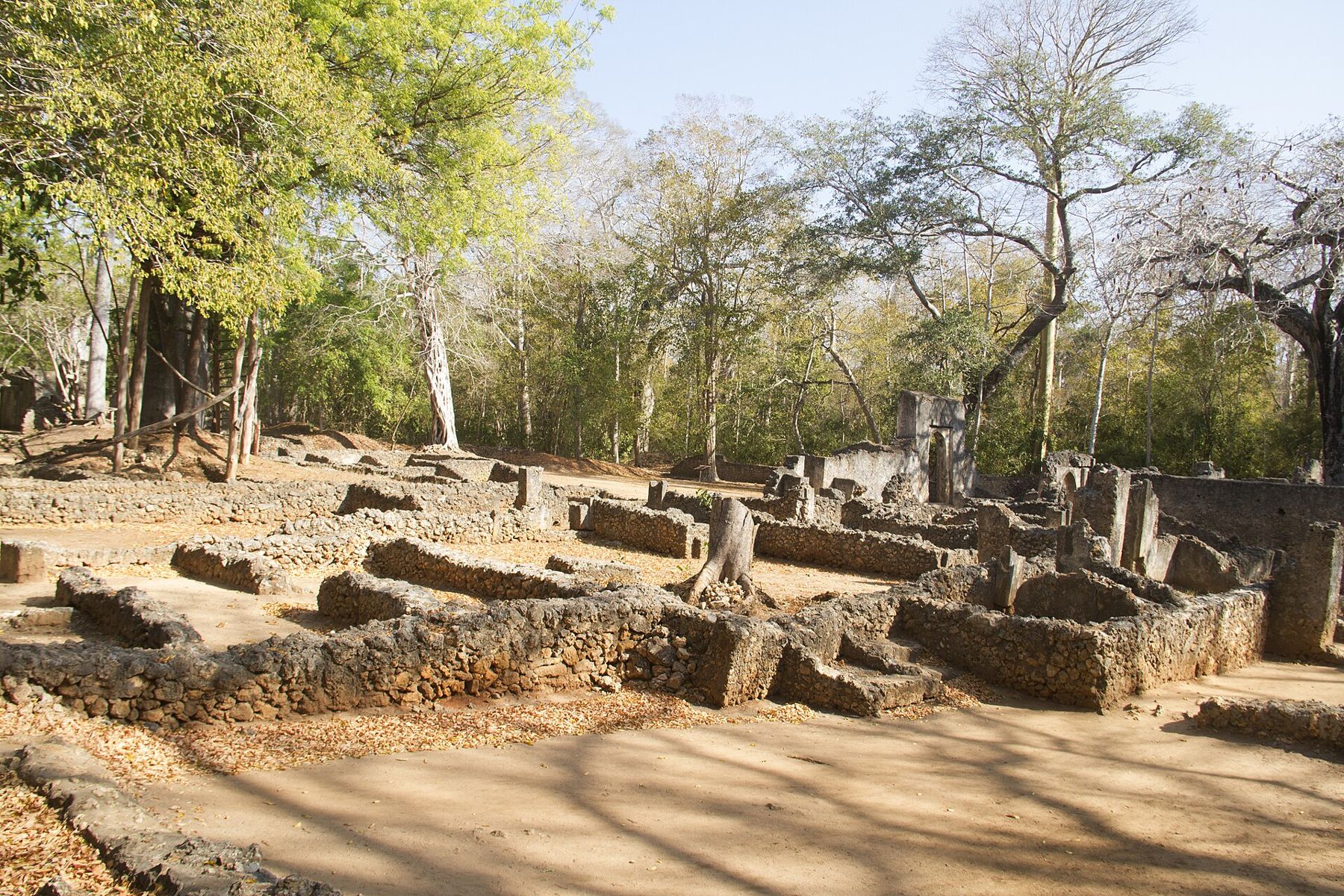
Turn off the main road between Watamu and Malindi, pass a gate and a ticket window, and within a few steps the traffic noise is gone. The air under the trees is still and green. Low walls of grey coral stone run off between the trunks in straight lines, and once your eye has learned to see them, you realise you are standing in a street.
This is Gede, sometimes written Gedi: a Swahili town that grew here from around the twelfth century, reached its fullest size in the fourteenth and fifteenth centuries, and was abandoned in the early seventeenth. Nobody lives in it now. The forest that grew back over the walls is what kept them, and today the site is protected by the National Museums of Kenya. A morning here is the clearest picture the Kenyan coast offers of what a stone town looked like before the Portuguese and the Omanis arrived.
A town that does not look at the sea
Most Swahili towns faced the water. Mombasa, Malindi and Lamu all grew up around a harbour, with their mosques and merchant houses facing the boats. Gede is different. It sits a few kilometres from the shore, near the head of Mida Creek, surrounded by the dry coastal forest that runs into Arabuko-Sokoke. Why the town was built inland is still debated; it may have been reached by water from the creek, or it may have been a place whose wealth came from farming and trade along the shore without needing a harbour of its own.
What is certain is that it was prosperous. Excavations turned up glazed bowls from the Islamic world, Chinese porcelain and glass beads, the ordinary household traces of a town plugged into the Indian Ocean trade. The pieces are small, but they put Gede firmly inside the same network that carried cloth, beads and ceramics to the coast and took ivory, gold and timber out.
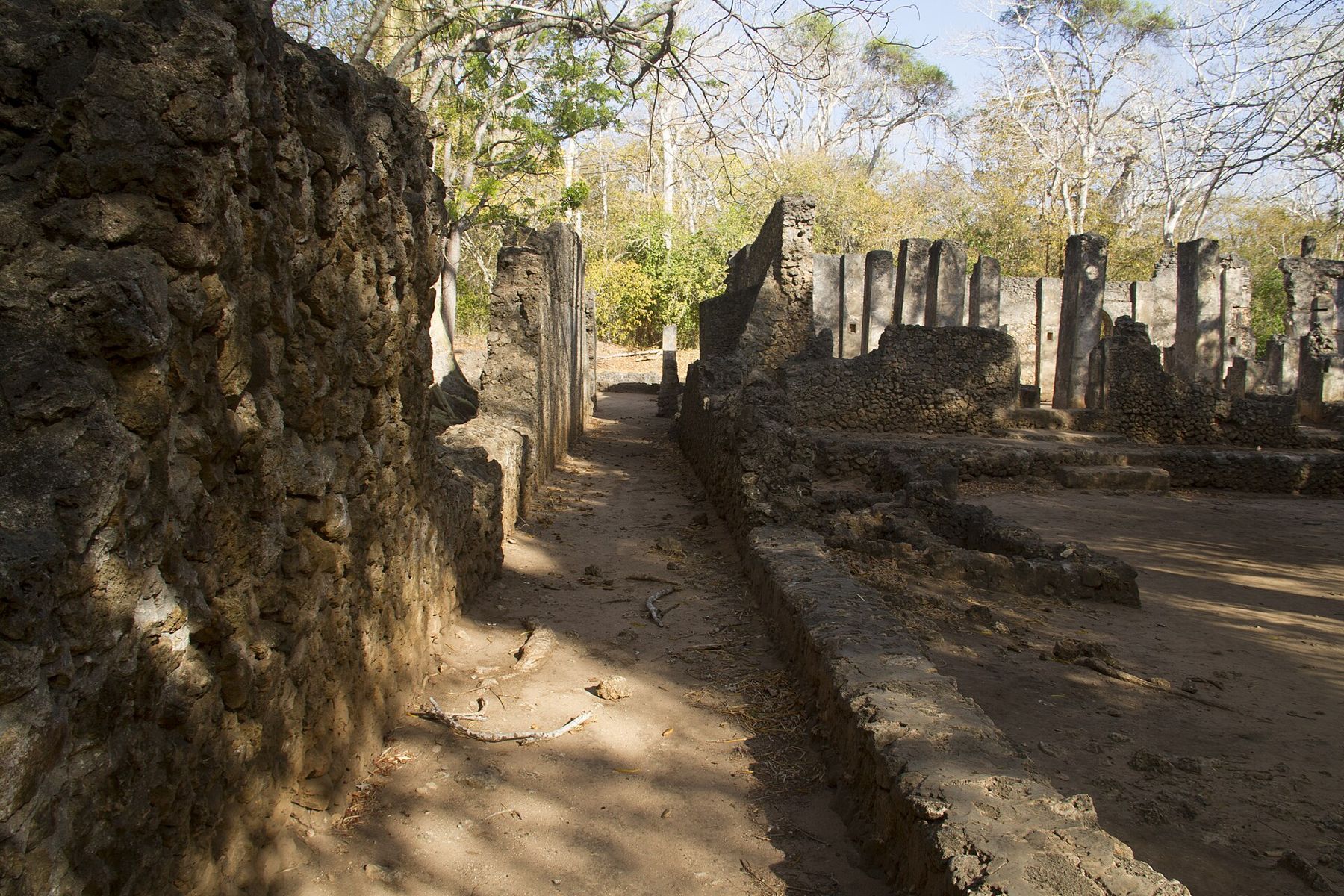
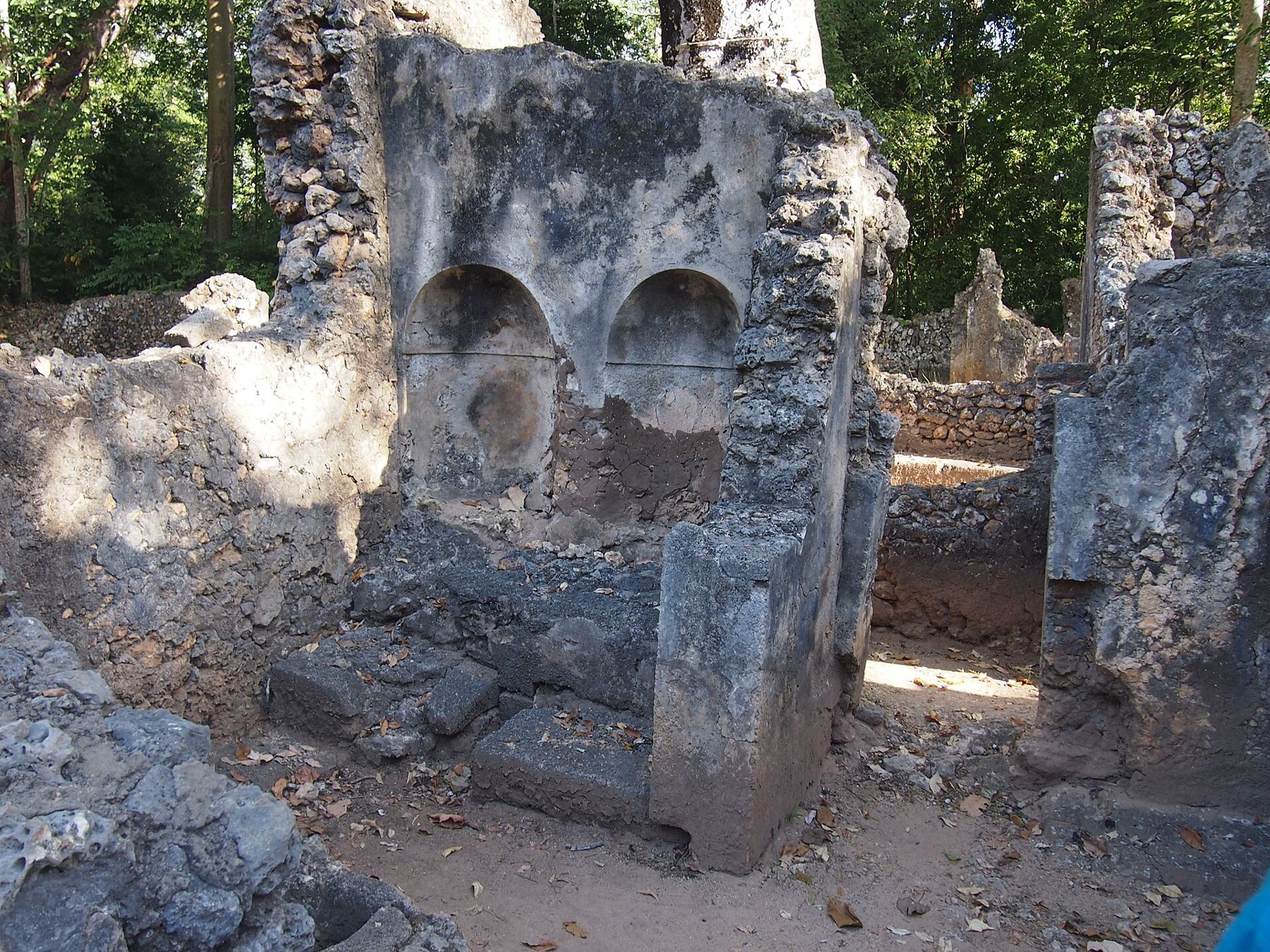
The walls were built of coral rag, rough lumps of fossil coral set in lime mortar, then plastered smooth. Most of the plaster has gone, and what you see now is the honeycombed stone underneath, darkened by centuries of rain and shade.
The Great Mosque and the palace
Paths from the gate lead first to the Great Mosque, the largest building of the town's religious life. Its prayer hall is a long room of square piers that once carried a flat roof, and the mihrab, the niche that points north towards Mecca, still stands at the far wall. Look for the well and the washing area outside, where worshippers cleaned their hands and feet before prayer; water management is everywhere at Gede, and the town had many wells.
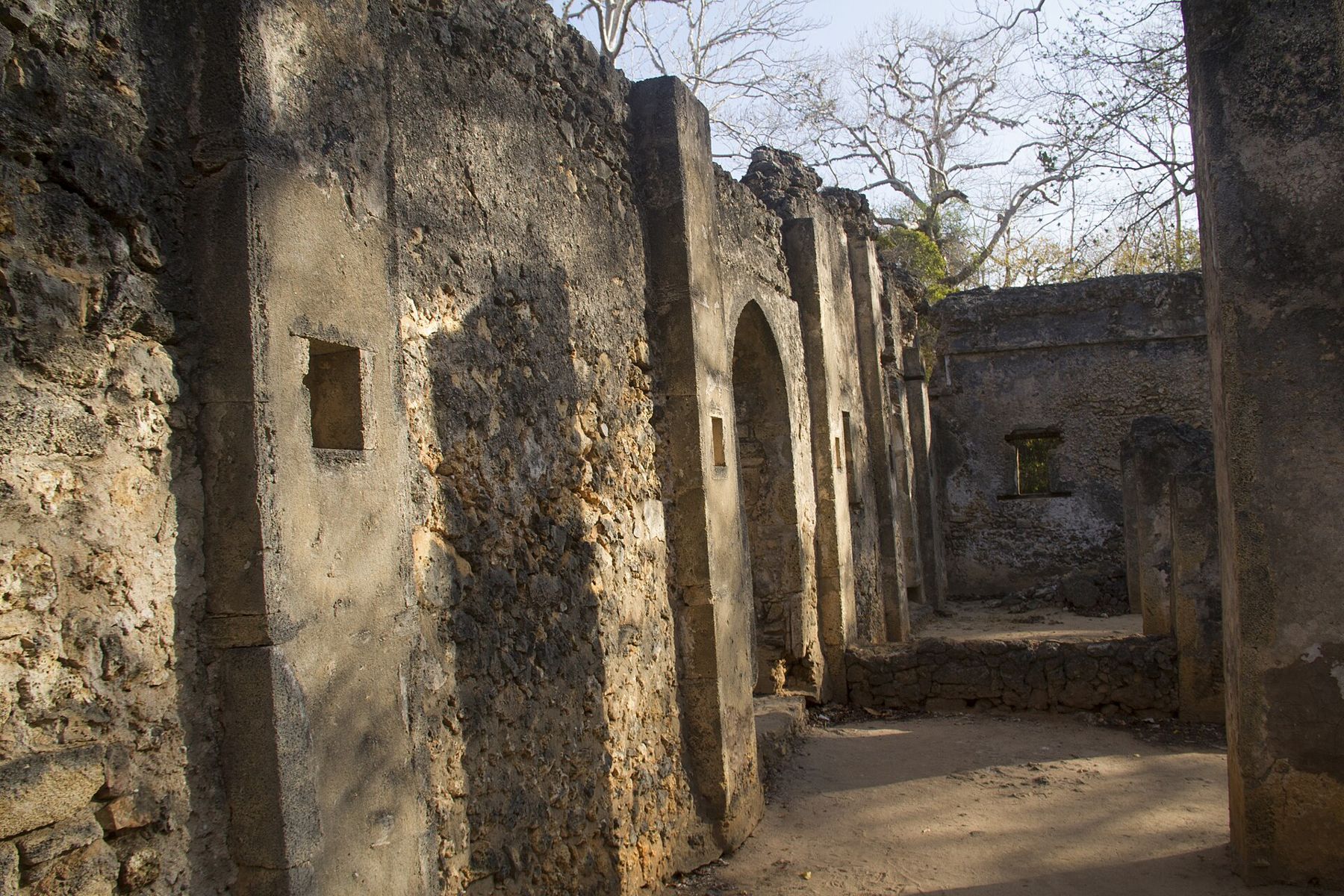
Beside the mosque lies the palace, a complex of courtyards, reception rooms and private quarters behind a grand arched entrance. It is the building that most rewards slow walking. Follow the sequence of rooms from the outer court inwards and you can feel the logic of a Swahili house of rank: public spaces near the door, family rooms deeper in, storerooms and washrooms tucked behind. Some walls still keep the shallow niches that once held lamps or fine ceramics.
The forest that grew back over the walls is what kept them, and today the site is protected by the National Museums of Kenya.North coast · Reefs and creeksMida Creek on the falling tide
Houses, tombs and a pillar
Around the mosque and palace lie the houses, named by the archaeologists after things found in them or the shape of their doors. Many follow the same plan: a sunken courtyard, a long reception room, then a pair of inner rooms, with a small lavatory and washing place at the back. The repetition is the point. You are looking at a neighbourhood, not a set of monuments.
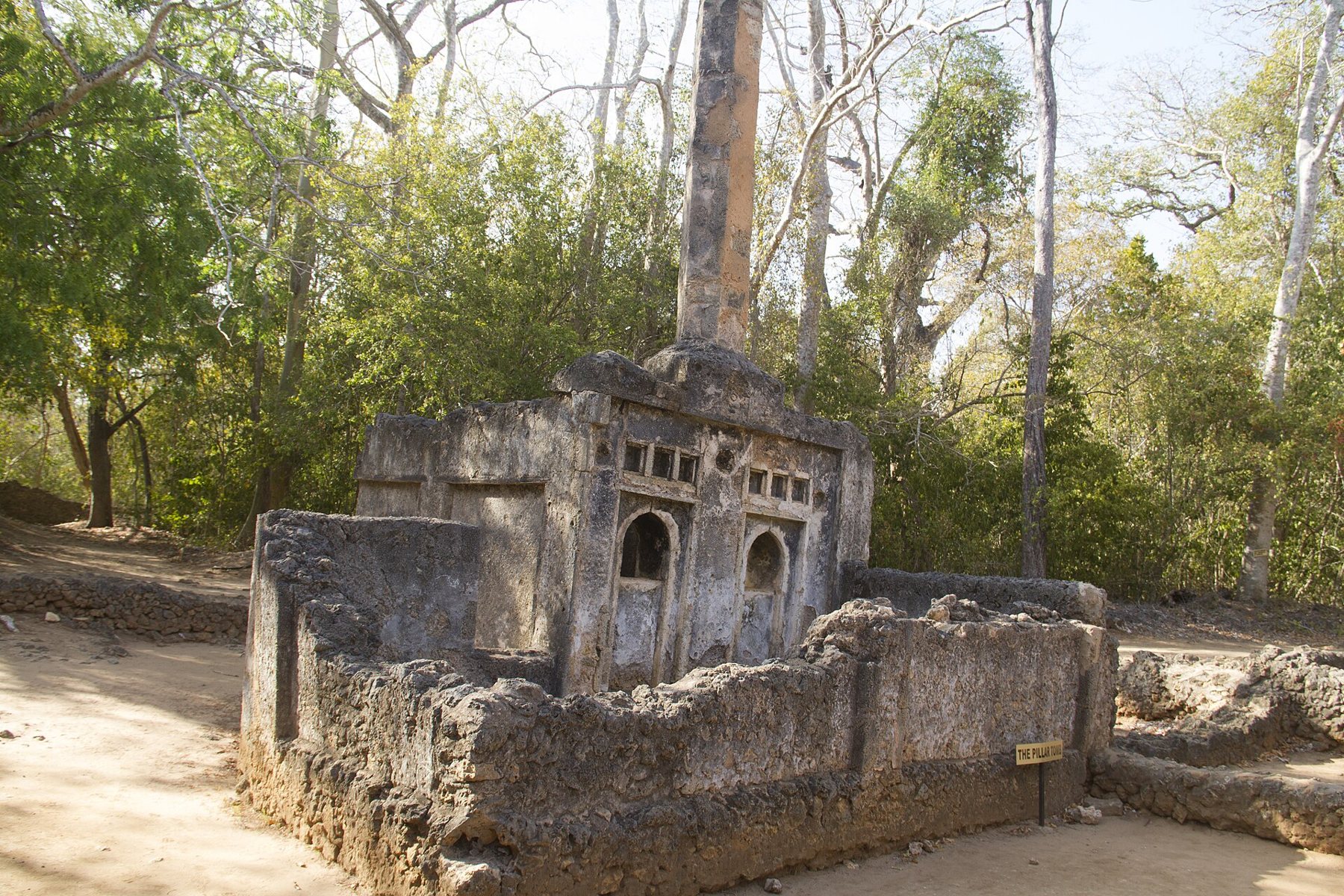
The tombs are the most striking stone shapes on the site. The best known is the pillar tomb, a walled grave with a tall column rising from one end, a style of memorial found at several old towns on this coast. Another tomb carries a date written in the Islamic calendar, which helped fix when the town was busy. Stand back from the pillar tomb to see it against the canopy; it is the one structure at Gede that reaches above the trees' lower branches.
Why the town emptied
Gede seems to have been abandoned in two stages. It shrank once, perhaps in the fifteenth or sixteenth century, then recovered on a smaller scale, and was finally left early in the seventeenth century. The reasons are not settled. A falling water table, raids by people moving down from the north, the shifting balance of power after the Portuguese arrived on the coast: all have been suggested, and the truth may be a mix. The town does not appear clearly in the Portuguese accounts, which is part of its mystery.
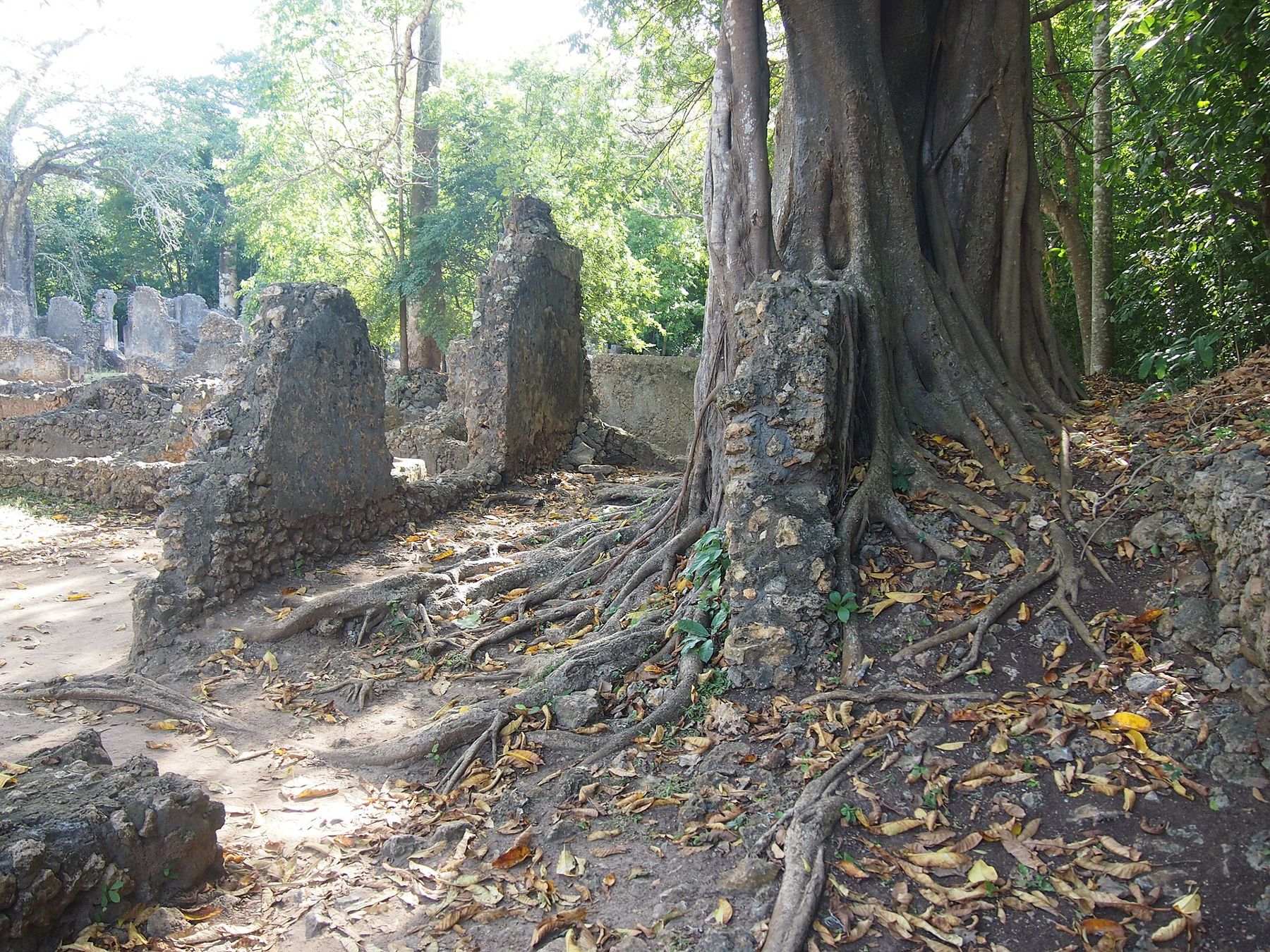
What happened next is easier to see. Baobabs and figs rooted in the courtyards and split the walls, monkeys moved into the canopy, and for a long time the town was known mostly to people who lived nearby. Serious clearing and excavation came in the twentieth century, and the site was declared a national monument.
A forest walk, and the museum
Allow two hours at least. The paths are flat and sandy, and small signs name the main buildings. The trees around the ruins are part of the attraction: big baobabs, tamarinds and figs, with Sykes' monkeys moving through the branches and plenty of birds. Walk quietly and you may hear more than you see. A short nature trail leads from the edge of the town into thicker forest, and binoculars earn their weight here.
- Go early in the day, when the shade is cool and the birds are active.
- Wear closed shoes; the ground has roots and the odd ant column.
- Carry water and use repellent, especially after rain.
- Keep food out of sight of the monkeys.
Near the entrance a small museum shows finds from the excavations and explains how the town was laid out. Look at it before you walk, if you can; it gives names to the shapes you are about to see. Guides from the site can show you round, and agreeing what you will pay before you set off saves awkwardness. Entry fees are paid at the gate, and opening hours and charges can change, so check before you go.
Fitting Gede into a day on the north coast
A visit to the Gede ruins sits easily beside the water. It is a short drive from Watamu and its marine park, and from the shallow, bird-filled Mida Creek, where the tide sets the timetable. Do the ruins in the cool of the morning and the creek or the reef when the water suits. From Malindi, a little further north, it makes a simple half-day; see why the sea at Malindi changes colour for that town's own story.
If the stone towns hold you, the walk round Mombasa's Fort Jesus shows what came after Gede: the Portuguese fortress, the Omani garrisons, the British. Gede is the part of the story that came before, and it is easier to hear in the quiet under the trees.
Every photograph here was shared under an open licence; the photographers are named on the pictures-by page.