North coast · Reefs and creeks
Mida Creek on the falling tide
Behind Watamu a wide tidal creek drains twice a day, uncovering mudflats where thousands of wading birds feed. Time your visit to the falling tide and the creek comes alive.
- The tide
- Go at low water
- From Mombasa
- About 110 km north by road
- Kindest months
- September to April for waders
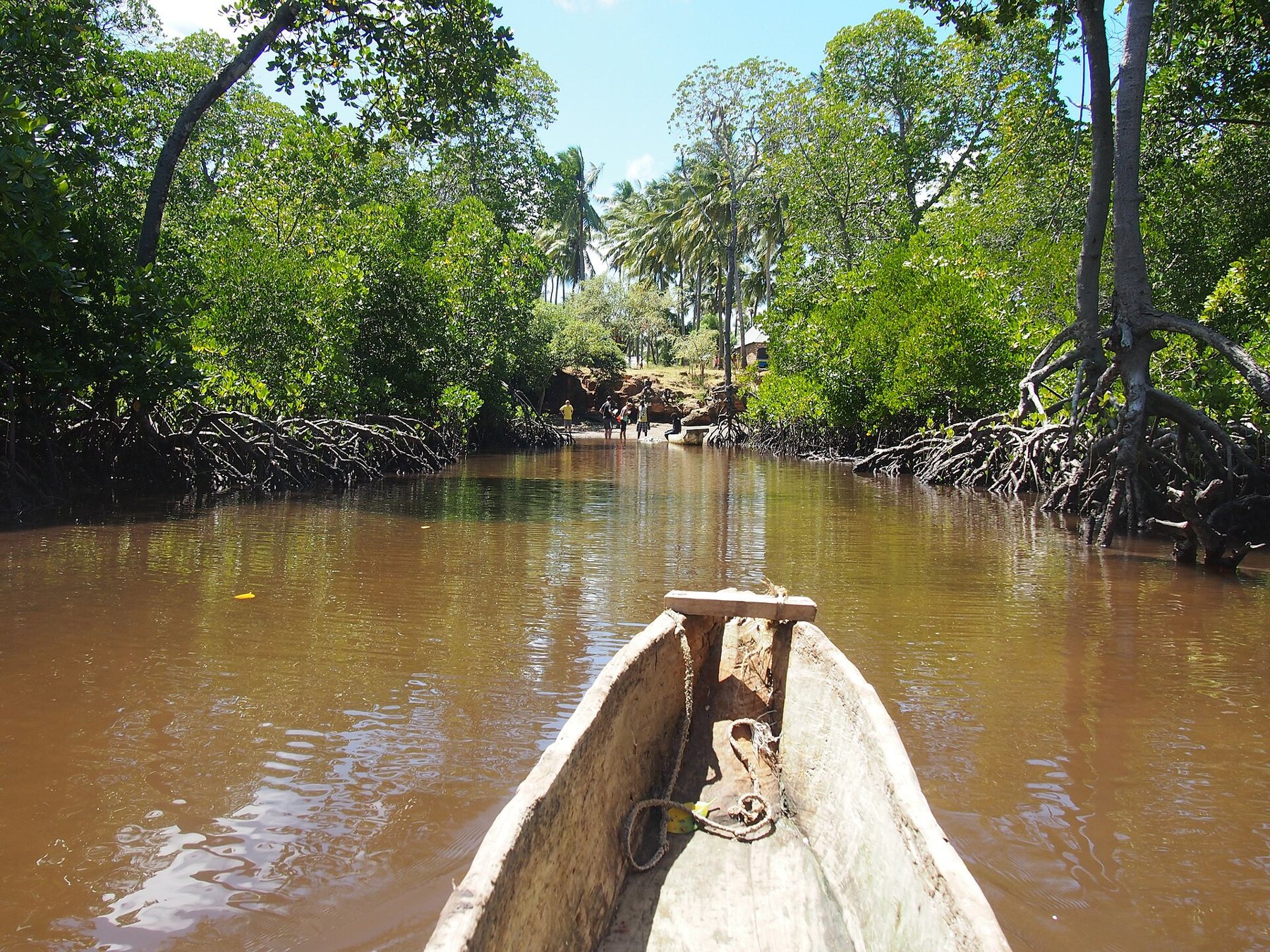
Mida Creek lies just south of Watamu, a broad inlet of the sea reaching inland behind the coast. It is not deep and dramatic like Kilifi Creek. It is wide and shallow, fringed with mangroves and edged by sand and mud, and at low water much of it drains away. That draining is the point. When the tide goes out, the creek floor is laid bare, and the birds come to feed.
A morning or an evening here has a slow rhythm. You watch the water fall, the mud shine, the birds arrive in their hundreds and sometimes thousands, and then the tide turn and push them back. Plan around the tide and almost everything else follows.
A creek made by the tide
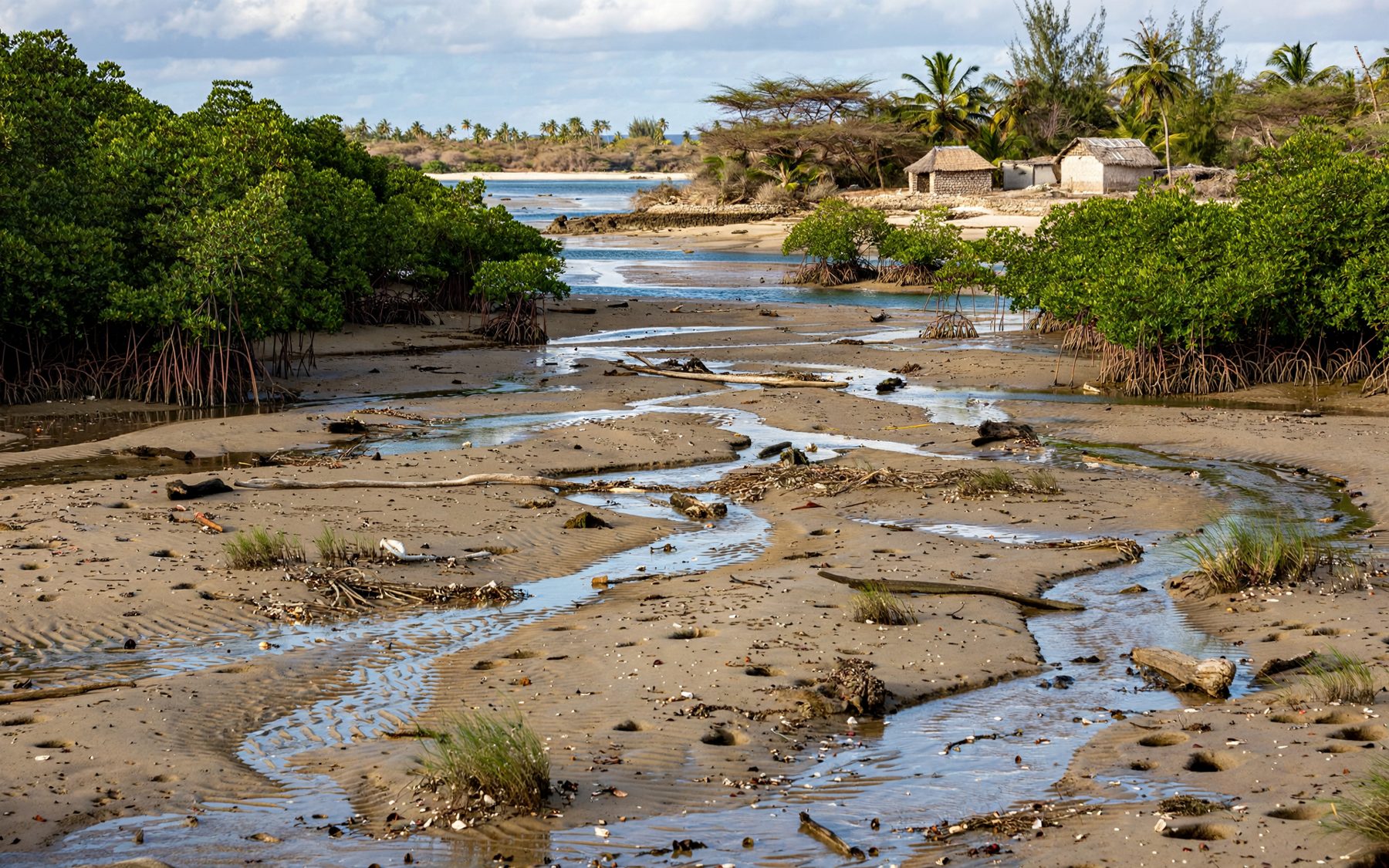
Twice a day the sea flows in through the narrow mouth of the creek and spreads out across its basin, and twice a day it drains away again. The range is greatest around new and full moon, the spring tides, when the low water uncovers the most mud and sand. In between, at neap tides, the creek empties less.
The falling tide is the best time to arrive. As the water drops, the first sand bars and mudflats appear, and the birds that have been waiting on higher ground fly in to feed on worms, crabs and small shellfish in the soft mud. By low water the flats are wide and busy. Then, as the tide floods back, the birds are pushed together onto shrinking patches of ground, which is often when you see them closest.
Tide tables for the Kenyan coast are easy to find. Look one up the day before and plan to be at the creek an hour or two before low water.
The creek is a working place as well as a sight. At low water, people from the villages along its edge walk out onto the flats to collect shellfish and to check fish traps, and small boats move along the channels on the tide. Give them room, and do not photograph anyone without asking first.
Mangroves
The creek is lined with mangroves, trees that grow where the sea floods their roots every day. Several kinds grow here, some propped on arching roots, others sending up pencil-like breathing roots through the mud. Mangroves hold the shoreline together, shelter young fish and crabs, and filter the water that runs into the creek. For generations their wood has been cut for building poles, and parts of this coast have lost much of their mangrove cover.
Around Mida, much of that loss has been slowed or reversed by the people who live on the creek. Community groups replant mangroves, run small visitor projects and look after the shoreline, and the money visitors pay for walks and boat trips helps to make the forest worth more standing than cut. Mida Creek also lies within the wider Malindi-Watamu area that is recognised as a biosphere reserve, where conservation and the lives of local people are meant to go together.
Plan around the tide and almost everything else follows.
Birds of the creek
Mida is one of the most important places for wading birds on the Kenyan coast. Many of them are migrants that breed far to the north, in Europe and Asia, and spend the northern winter here, arriving from around September and leaving by about April. Others live here all year.
- Crab plovers, black and white with heavy black bills, are a speciality of these shores and feed on crabs out on the flats.
- Sandpipers and plovers of several kinds run in loose flocks along the water's edge.
- Herons, egrets and flamingos are seen on some visits, standing still in the shallows.
- Terns fish over the open water and rest on the sand bars.
Identifying waders is not easy, and there is no shame in simply watching. Binoculars make a great difference, and a local guide with a telescope and a good eye is worth having.
The flats are not only for birds. Look down as well as out, and you will see fiddler crabs waving their single large claws at the burrow entrances, mudskippers flicking across the wet surface, and the tracks of everything that has crossed since the water went down. In the mangroves, kingfishers sit quietly on low branches, and in the trees along the shore you may hear monkeys moving.
Behind the creek, inland, lies the Arabuko-Sokoke forest, one of the largest remaining blocks of coastal forest in East Africa and known for rare birds and mammals of its own. A day can easily hold both: the forest in the cool of the morning, the creek on the afternoon tide.
The boardwalk, the bridge and the canoes
On the eastern side of the creek a community-run boardwalk leads out through the mangroves to a hanging bridge over a channel and an open view across the flats. It is the easiest way to see the creek on foot without sinking into the mud, and it brings you close to the mangrove roots and the crabs that live among them. The walk is short, and the small fee goes to the community.
The other way to see Mida is from the water. Local boatmen take visitors out in dugout canoes, poling or paddling along the channels between the mangroves and across the shallows. It is quiet, close to the birds and very slow, which is exactly right. Time it with the tide: too low and the canoe will ground; on a falling tide with water still in the channels, you can drift out towards the flats as they uncover.
On the water
- Agree on the route, the time and the price before setting off.
- Bring a hat and water; there is little shade on the open creek.
- Expect wet and muddy feet if you get out on a sand bar.
- Keep voices low and give the birds space; flocks that are flushed repeatedly lose feeding time they need.
Sunset over the creek
The creek faces west across the water, so evenings here can be very fine, with the light turning gold over the mangroves and the last birds flying to their roosts. If the low tide falls in the late afternoon, you can watch the feeding and stay for the sunset. Bring insect repellent for the evening, when mosquitoes rise from the mangroves, and ask a travel clinic before the trip about malaria precautions on this coast.
Mida sits between other places worth your time. The coral-stone town at Gede is a short drive inland, the reefs of Watamu's marine park lie just across the point, and the road south passes the creeks described in the coast road north from Mombasa. But give Mida its own falling tide. It is one of the quieter pleasures of the whole coast.
Every photograph here was shared under an open licence; the photographers are named on the pictures-by page.